You too, Brutus, my son?
Tu quoque, Brute, fili mi?
– Julius Caesar
In the beginner's mind there are many possibilities, in the expert's mind there are few.
You too, Brutus, my son?
Tu quoque, Brute, fili mi?
– Julius Caesar
“Defend me from my friends; I can defend myself from my enemies.”
Garantissez-moi de mes amis, écrivait Gourville proscrit et fugitif, je saurai me défendre de mes ennemis.
— Gabriel Sénac de Meilhan, Considérations sur l’esprit et les moeurs (1788): “De L’Amitié.”
Sénac de Meilhan was quoting Jean Hérault, sieur de Gourville (1625 – 1703).
Eternity isn’t some later time. Eternity isn’t a long time. Eternity has nothing to do with time. Eternity is that dimension of here and now which thinking and time cuts out. This is it. And if you don’t get it here, you won’t get it anywhere. And the experience of eternity right here and now is the function of life.
– Joseph Campbell, The Power of Myth (2001)
ST April 4, 2008
Mark of a leader ‘not in his top grades’
That is the assessment of those who were top students. They value competence, leadership qualities, including EQ, more
By Jeremy Au Yong
ACADEMIC grades are a useful measure for identifying a potential political leader but it should not be the topmost criterion.
That assessment came, interestingly enough, from people who were top students, with four As in their A levels.
They were reacting to Prime Minister Lee Hsien Loong’s statement on his urgent search for a successor in an interview on Tuesday, when he also highlighted the brain drain among the 4As students. PM Lee had also indicated that based on past experience, it would take about three elections to groom a leader.
The Straits Times interviewed 10 people who had 4As, and the key traits they seek in the country’s leaders are competence, capability and leadership qualities, including emotional quotient or EQ.
Top grades are not critical, they added.
Even a PM without a university degree is not anathema to civil servant Jenny Tan.
BIGGER WORRY
Another civil servant, Mr C.L. Lian, 31, put it this way: ‘The person must have demonstrated intellect and problem-solving ability, but the emphasis doesn’t have to be on grades. I’m sure Bill Gates would be someone you want.’
Mr Gates, co-founder of software giant Microsoft, is one of the world’s most famous university dropouts.
Mr Lian added that though the current selection system was sound, the grooming period might have to be shortened.
‘Currently, there is this grooming period but we may not have 20 years to give,’ he said, referring to PM Lee who entered politics in 1984 and became PM in 2004.
Mr Lian said it was important for the political leaders to decide which parts of government need leaders with knowledge and experience in government, and which ministries can do with leaders without government experience.
He cited Senior Counsel K. Shanmugam – who is going straight from being an MP to Law Minister – as a case of a person who was not groomed to be a minister, but had the right skills and experience.
Some interviewed, like Nominated MP Siew Kum Hong, felt there may be a need to change the way leaders are chosen.
Said Mr Siew, who had 4As in his A levels: ‘Now, we seem to be going about choosing one like we go about giving scholarships. There’s this list of objective criteria.’
The answer to who should be the next PM will depend on how the question is framed, he added. ‘If we are looking for technocrats and managers, then you’ll be competing with the world. If you frame it differently, if you’re looking for leaders of the future, you probably could come up with a different characteristic.’
MP Baey Yam Keng, another top scorer, said academic excellence was a ‘necessary although not sufficient’ criterion. Even then, he said exceptions could be made. ‘Grades are important at the entry point but over the years, they become less and less important.’
In his interview with The Straits Times and Lianhe Zaobao, PM Lee had highlighted data that show one in four – 150 out of 600 – top A-level students yearly works overseas after their studies. ‘This flow is going to continue. So it’s a big challenge to find successors, particularly for politics,’ he said.
The extent of this brain drain does not surprise those interviewed, who added that it is not at the heart of the problem.
Said corporate tax associate Sarah Seow, 26: ‘I believe the greater problem isn’t the brain drain, but the political apathy of my generation.
‘I know that among my peers still staying on in Singapore, many of us are talented and intelligent enough to become the Government’s next tier of leaders – the only problem is that we may have become so caught up in our own careers and desires that we don’t see a reason to get involved in politics.’
Not long ago, the city’s time was said to be over. Not anymore. Like an indestructible kung fu champ, it’s kicking back—big time. Karl Taro Greenfeld gets right into the action
We’re downstairs at King of the King, a Cantonese seafood restaurant in Hong Kong’s Central district. Behind lacquered–wood partitions, mah–jongg players shuffle tiles, making that noisy rattle—like a thousand impatient women tapping their fingernails. But the eight of us seated around a white cloth–covered table are playing poker, not mah–jongg. While the cards are dealt, the talk is of deals and business and opportunities and new properties. A hotelier, Jason (who brought me here), is wondering about selling out to a Russian businessman, and Ben, the scion of a wealthy family, is discussing investing in some property in Beijing, and Chris, a trader for a hedge fund, says that the thing to do is borrow in Hong Kong dollars at two and three–quarters percent and deposit in Australia at five and three–quarters and use the spread to buy a new Ferrari. Then the guys are talking about Full House, one of the Korean soap operas sweeping greater China and starring the actress Song Hye Kyo, who is so fine—a little chubby, comments someone, but she’s still so leng lui, dude. But the conversation, between hands, keeps going back to deals and opportunities and property: the development in Kowloon West, Korean equities, new hotels, better cars. As I wait for my cards, I look around and notice that everyone at the table is wearing a better wristwatch than I am. When I ask Chris, who is next to me, what time he has to go to work in the morning, he shrugs. “Whenever.”
In Hong Kong today, it seems that no one is bothering to earn a living because everyone is too busy making a killing.
In between noodles with pork, bowls of fried rice, and crab and corn soup, I find that I am losing track of the half–Cantonese, half–English conversation and become slightly impatient, so I go all in with two pair, kings over sevens, and this guy Scotty across from me in a hoodie sweatshirt, a Nike visor, and his cell phone dangling from a lanyard around his neck calls me and has kings and jacks. I’m about to buy in for another sixty dollars when I look around the table and wonder who the easy money is and realize that it’s me.
I fold my cards and explain to Jason that I have to meet someone, which is true, and I take my leave—past the clattering mah–jongg tables, the fish tanks stocked with garoupa whose bulging eyes make them look as if they are taking pity on my losing ways—and head up the stairs and out the door and onto Queen’s Road, where the air is hot and damp and smells of wet concrete and Victoria Harbour.
There are the usual crowds of well–dressed Hong Kongers out for the evening: businessmen in summer–weight suits and wire frame glasses; pretty girls with hennaed hair, artisanal T–shirts, and treated denim jeans; gweilo—Western women in shiny tops, jeans, and strappy heels. The sidewalk is hard going: The pavement is being torn up. Steel pedestrian bridges laid down over scars in the concrete reveal tangled layers of fresh plumbing and fiber–optic cable. The city, apparently, is rewiring.
I ride up an escalator at the Entertainment Building, cross over an air–conditioned pedestrian bridge to Central Tower, then another to the Central Building, then to The Landmark complex, Alexandra House, and the Princes Building and I’m back in the Mandarin Hotel—all the way across Central Hong Kong without setting foot outdoors. I’ve always enjoyed this particular route, not only for its convenience but also for the feeling of being above it all and for the perspective it provides into Hong Kong’s psyche. In the past, I observed that it took me by two Prada stores (just in case I’d forgotten to pick something up at my first Prada opportunity, or, even more worrying, something I’d bought at the first shop had gone out of fashion before I reached the second). Then, in the bleak early years of this century, the route took me past shuttered boutiques, the occasional bum, and, for a time, anxious pedestrians wearing surgical masks. I recall making the walk in the opposite direction, from the Mandarin to the nightlife district of Lan Kwai Fong, and not seeing another soul for most of the trip. That was in early 2003, at the height of the SARS scare.
My family and I moved away from Hong Kong in 2004, after living in the city for more than three years. When we left, the territory was still reeling from SARS, the lackluster leadership of Chief Executive Tung Chee–Hwa, and paralyzing pro–democracy marches. Unemployment was stuck at ten percent. The property market, still the main economic driver in Hong Kong, had plunged fifty percent from its late–1990s highs, leaving 200,000 homeowners in this city of seven million people in a negative equity position in which they owed more on their flats than they were worth. Luxury hotels were closing. Restaurants were nearly empty. I would occasionally find myself the only shopper in swanky boutiques.
It was as if everyone’s worst fears about Hong Kong’s return to China had come true. With reunification, it seemed that Hong Kong’s advantages—rule of law, convertible currency, world–class service, a large and sophisticated business and financial community—would gradually be arbitraged into irrelevance as Western businesses bypassed the Fragrant Harbor (the literal translation of Hong Kong) and headed straight for Guangdong and Shanghai. Who needed Hong Kong anymore, the reasoning went, if you could deal directly and more cheaply with the Chinese? There was a creeping sense that this city, which had once seemed a world metropolis on a par with New York, London, and Tokyo, was no longer even the most important city in southern China.
Then came SARS. Magazines ran stories with headlines like “Urban Decay: Cities Are Living Organisms—and Hong Kong May Be One That’s Dying,” explaining how disease outbreaks have been the death knell for many a great burg. I remember that headline well because I wrote it when I was living here and running Time magazine’s Asian edition.
Yet the city I flew into just sixteen months after moving out had not only recovered, it had been transformed. Hong Kong’s scientists, doctors, and public health officials had done a remarkable job of beating back SARS and warding off avian influenza outbreaks. The perpetually disappointing chief executive Tung Chee–Hwa had finally resigned, citing “health reasons,” and had been replaced by efficient former finance secretary Donald Tsang. And the property market that had been like an ankle weight on Hong Kongers at the upper and lower ends of society was now booming in a manner very familiar to New Yorkers, Floridians, and Californians.
My stroll back to the Mandarin reveals how much has changed. Central Hong Kong used to be office buildings with ground–floor boutiques tucked discreetly under awnings. Now the branded boutiques have bulged out past the old shells of buildings like bodybuilders grown too huge for their clothes. Even the famous Chater House office building blares Armani from its street–level storefronts, and a corner of The Landmark complex is a Louis Vuitton store. The march of progress, for Hong Kong, has been the march of brands as they’ve taken over entire urban vistas. Gazing along Des Voeux Road means staring down a canyon of Armani, Prada, Louis Vuitton, Dolce & Gabbana, and Yves Saint Laurent. Suddenly, everything seems newer and bigger than before, with higher prices and better service. By this fall, there will be a new Mandarin Oriental, a new Four Seasons, a new Ritz–Carlton. A new Disneyland. A new Ocean Park. New clubs in Lan Kwai Fong serving new drinks—the Flirtini (this year’s lychee martini). A new bridge to new casinos in Macau. A new cable car up to the Big Buddha statue on Lantau Island. A new mall at the International Finance Centre. New flats throughout Hong Kong oversubscribed overnight. A new chief executive. New enthusiasm.
As China goes from economic strength to strength, with no end of ten percent annual growth in sight, Hong Kong’s geography has become its greatest asset. Millions of tourists from China flood in with billions of kwai as well as hundreds of thousands of businessmen looking to spend or launder their money on flats and Fendis. These are a new breed of Chinese tourists who have big money and speak English and shop at Harvey Nichols (new Asian flagship boutique) and Louis Vuitton. In terms of tourism, the Chinese are the new Japanese. Suddenly, all the vast promise of that 1997 passing of stewardship seems to be, incredibly, coming true. China is the hottest story/market/country on the planet, and Hong Kong has more than a ringside seat; because of its financial services, rule of law, and currency transparency, it’s become the middle of the Middle Kingdom.
All of my old friends who were envious of my departure are now scheming how to extend their postings or thinking of leaving their companies to start hedge funds, property ventures, or members–only nightspots. Fellow journalists who lamented being stuck in this backwater of a story are renewing their leases, at twenty to fifty percent higher rents. Everyone is planning, dreaming. Conversations revolve around new development, bigger properties, and insider transactions; at times I feel like I have walked into a gigantic, swankier version of the Glengarry Glen Ross offices. “Hong Kong is run by the property market and the stock market,” says developer and entrepreneur Allan Zeman. “The people here are born gamblers, and when they are feeling this good, it builds on itself.”
I catch that buzz later that night while I’m having drinks in Hei Hei Wa, a new club, with my friend Davena Mok. She promotes DJs, musicians, clothing brands. At least I think that’s what she does. The truth is I’ve never really figured out Davena’s line of business, but I know it requires that she spend vast amounts of time in trendy nightclubs and that she be on hugs–and–kisses terms with every impresario, party promoter, and door person in Asia. We’re on the back patio, near the Jacuzzis, beneath a canopy of lush palms that rustle in the breeze. I can forget, for a moment, that I am in the middle of Hong Kong. But then a guy wearing sunglasses and a three–button black suit joins us on the patio, trailed by a much younger woman in a shoulder–strap black dress and several fellows in jeans and trainers, and I remember hearing a rumor that this club was popular with a certain element of Hong Kong society that occasionally closes deals with chopper knives instead of contracts and cash. Rumors of a joint being a little mobbed up, Davena points out, have never killed business at a Hong Kong nightspot. “There’s so much happening now,” she says between sips of a vodka and orange juice. “Everyone’s opening up new clubs, new bars. The guys from Fly have Volar. The guys from Drop have Finds. The guy who does Jewel is expanding Dojo. It’s all a bit ridiculous, but it’s good fun.”
Davena’s story is typical of where Hong Kong is right now. A few years ago, when the city was mired in a seemingly interminable slump and Fortune magazine was predicting it might become “the Cleveland of China,” Davena was broke enough to work as my assistant. Now, less than two years later, she is a one–woman…whatever she is. But she is turning away business and has become choosy about her clients and partners. The dreaded brain drain that had young, talented Hong Kongers fleeing for the United States, Australia, Canada, and, mainly, China has reversed itself as the best and the brightest return. My friend Tom Hilditch, editor of HK Magazine, has a simple explanation for the about–face. “There’s all this talk about China, China, China,” he says, “but when you actually go there and stay for a while, you realize how lacking it still is in terms of basic comforts. After you’ve spent a week or two in China, arriving in Hong Kong is an incredible relief.”
Those waves of returning Chinese have launched more nightclubs in the past twelve months than were started in the entire forty months I lived in the territory. And Hong Kong remains one of the best cities in the world for clubbing because all the venues are within walking distance of one another and you can easily make the rounds of five or six joints in one night. Be forewarned, though, that you might find yourself stalled at the velvet rope: Almost every club has a members–only policy that is waived only for the seriously rich, trendy, and foxy.
The newest hot spot is Volar, and as we’re leaving Hei Hei and walking past the California Fitness Gym on Wellington Street, we run into Jackie, the door person at Volar, who explains that she’s on her way to Hei Hei. “I’ll be at the I [as in Dragon–I] later, and Volar will be happening later later, when the models get free drinks,” she says. (Question: When did they sign the UN accord that guarantees models free drinks everywhere in the world?)
We end up reversing the order and hitting Volar first, sitting down with its owner, Benedict Ku, and the former emcee of the rap act LMF, Sam Lee. Benedict’s family manufactures artificial flowers and Christmas trees, businesses that have left Benedict yearning for a more fulfilling outlet. “Guys like me, from good families, we want to create, we want to make a difference—not just spend our parents’ money but get the juices flowing. There are so many creative people in Hong Kong right now, and that’s why the vibe is so full on.” He’s designed his club as a series of circular rooms off a main rectangular room that has an ovoid DJ booth in the middle and an elliptical bar off to one side. As the night goes on, I notice a similarity in the design and style of these nightclubs: The recessed lighting, overstuffed banquettes, and padded and cushioned walls and ceilings make me feel like we’re on the set of Miami Vice: Far East, only instead of pastels and linen the guys are wearing Deth Killers T–shirts and Chrome Hearts shades.
At Dragon–I, we run into a Frenchman I know who worked for a watch company that occasionally advertised in our magazine. “Thank God we didn’t leave Hong Kong,” he says, momentarily distracted from a beautiful, indifferent Anglo–Indian girl for whom he has bought a glass of white wine.
Before I can correct him, he continues: “The girls here are the best anywhere in the world. And they are easy—”
The girl glares at him. “Except for you, of course,” he says quickly. “Not you.”
The next night, I’m having dinner at Isola, an Italian restaurant in the new International Finance Centre mall, the future home of the Four Seasons. There is a patio all the way around the restaurant and an outdoor lounge on the top floor with cushioned benches laid out between planters. At dinner are a few of my old colleagues: Jim Erickson, the senior business editor at Time, writer Aryn Baker, and Neil Gough, a senior writer at the South China Morning Post. The conversation turns to what Hong Kong was and what it has become, and how we got from there to here so quickly.
“None of it is real,” explains Erickson. “It wasn’t that bad when everybody said it was bad, and it isn’t that good now.”
But if you look around this packed restaurant, where the excellent rigatoni with lobster goes for forty dollars a plate and the cheapest bottle of Barolo on the menu is ninety dollars, you get the feeling that it’s pretty damn good right now. The mainlanders here are sophisticated and are familiar with fine Continental dining. There is a rich mix of expats and locals. For example, in the corner of the restaurant, against one of the plate glass windows, I see a fellow I recall who cashed out of his investment bank to start a hedge fund. That was when I was moving away. Now, as we get reacquainted, I find out that—surprise, surprise—he’s doing very well.
“We’re not going anywhere,” he says. “How’s New York?”
“Not like this,” I tell him.
It’s not the transition from bust to boom that is startling but rather just how different Hong Kong is from the place I called home. In my mind’s eye, Hong Kong should never change, the duplicate Prada boutiques should be reliably where they have always been, the Mandarin must remain resolutely and impeccably the Mandarin, and the slippery steel spiral staircase at the top of D’Aguilar Street must always be the shortcut to Dragon–I. Instead, it’s all changed, or is changing, and those Prada boutiques have consolidated into a bulked–up Prada superstore, the Mandarin I know and love has become the second–best Mandarin in Hong Kong, and at the top of D’Aguilar Street are a series of bars punched into the stone retaining wall and a fancy, well–lit stairwell that climbs up, up, up to newer, better nightclubs and bars.
Though renewal is perhaps the essence of a city, when I am confronted with it in a place I know so well, it is jarring and evokes waves of nostalgia that I didn’t even know I felt for a place and time. My younger daughter, Lola, was born at Matilda Hospital up on the Peak. And for my older daughter, Esmee, who was fifteen months old when we moved here, her first memories are of Hong Kong and our apartment on Barker Road with its dazzling view of Central, Victoria Harbour, and Kowloon. (For years, Esmee referred to every skyscraper she saw as “a Hong Kong.”)
I’ve come to Knightsbridge Court to see a few old friends and to walk down the tropical Chatham Path from the Peak to May Road. I’m strolling with my friend Adrianna Trinker and her boxer, Bingo. The path is steep and zigzags through lush forest and over vertiginous streams. It is about ten degrees cooler in the shade than in the patches of sunlight. Bingo charges ahead, skidding to abrupt stops to sniff at the spiny black caterpillars lining the trail. I used to walk with my daughter on this path, holding her hand so she wouldn’t slip on the slick, mossy pavement. On a paved spur about halfway down the hill is a little shrine with a red lintel and smoking incense burning in ceremonial urns surrounded by offerings of wrapped fruit. In the dark, recessed interior of the altar are figurines of the Chinese goddess Kwan Yin, whose virtues are mercy, courtesy, justice, and of course wealth. To the west side of the shrine is a rivulet of trickling water in a shallow groove in the rock. Here, along the banks of this tear duct of a stream, someone hoping for good luck has built a miniature village of two–inch stone houses and intricately carved matchstick–sized farmers, merchants, and scholars seeking their own modest nirvanas. My daughter always marveled at this diorama. “Can I touch it?” Esmee would ask. And I would shake my head.
At the bottom of the path, Adriana calls Bingo and sends him charging back up the hill toward home. We say our good–byes. My daughter and I used to ride the Peak Tram one stop from here back up to Barker Road. I always enjoyed the feeling of being the only local amid the tourists riding to the Peak, using this most exotic of funiculars for that most ordinary of journeys: going home. The conductor let us ride for free. Now a tourist myself, I take the Peak Tram down to Admiralty and pay the full fare.
I want to tell you about my best day in Hong Kong. It was October, a few months before we departed. I had driven my family to a country park in Sai Kung, a few miles north of Hong Kong in the New Territories. We parked and hiked two miles over jagged hills, between dry brush and bamboo that smelled like licorice. The trail was paved most of the way, making for easy going until we came to a forty–five–degree rise on a limestone karst and I had to carry my younger daughter’s stroller up the long, sheer climb. What breath I had left from the hard ascent was taken away when I saw the vast bay arcing toward the distant forested headlands. It is a curve of beach as pleasing and gentle as the tip of a manicured fingernail, with white sand in perfect proportion to turquoise water. This sort of tropical vision within a few miles of one of the most densely populated cities on earth was a wonderful surprise. You would expect this in Bali, Goa, Phuket, but not Hong Kong. Tai Long Wan is, I believe, the loveliest beach in all of southern China.
On that fall afternoon, there was not another soul in sight. The descent to the ocean took us past freshwater ponds teeming with ducks, fish, and turtles, and a quiet village with two noodle restaurants where the proprietors were sleeping on plastic chairs with their feet propped on wooden railings. The sand was fine–grained, the type that adheres to your legs even when it’s dry; the water was cool and softer than most ocean water, a mixture of saltwater and fresh runoff from the headlands.
My wife and I left our daughters playing in the sand with our amah, Marina. We hiked along the beach and turned inland, following one of the streams up a grade that grew steadily steeper as we leaped from one mossy stone to another, clambered up sheer faces by holding on to tree roots, and swung ourselves over slabs of limestone. The water was a torrent now, the stream narrowing into spindly falls that splashed into deep, cool, shadowy terraced pools. All around us was the sound of rushing water; a faint breeze from the ocean rustled the bamboo. Down below, on the sand, we could see Marina and our daughters, Esmee and Lola, the only pocket of humanity on the beach—spots of tan skin on the white sand as they raced the tiny waves in. On the horizon were specks of green and brown—tiny, uninhabited islands—with the occasional junk passing slowly in their lees.
At that moment, standing beside my wife atop this succession of waterfalls, gazing at my family below on the beach, with the whole of southern China—no, the whole of Asia—spread out before me, I felt like I was on top of the world.
So one afternoon on this trip, I catch a ride out to Sai Kung and climb the hill again. It’s hot and damp, and it starts to rain at the summit. I see the ocean, the little village, a few wooden boats pulled up onto the sand. I’m taking stock. I’m relieved: At least this patch of sand and sea hasn’t changed.
I’m sitting in my old office in Taikoo Place, a glass–window corner thirty–seven floors above Victoria Harbour. Michael Elliott took my job as editor of Time Asia and then, like one of those boutiques in Central that can’t stop growing, bulked up his role to an even bigger job as international editor in charge of Time’s European and Asian editions. He’s in my old chair, behind my old circular desk, his sodas chilling in my old refrigerator. I miss this office and especially its stunning views of the harbor and Kowloon beyond. Directly across the water is the spit of land that used to be Kai Tak Airport and East Kowloon.
Mike is talking about the new chief executive, Donald Tsang, and about who is supporting him and who is opposing him and whom he had better watch out for. It’s the kind of information and gossip that Mike excels at collecting and is always pleased to pass along. I used to care about stuff like this, I think. I really did. Hong Kong—where just two years ago, 500,000 people marched in the streets to protest impending legislation that they feared would curtail their civil rights—used to care as well. It doesn’t anymore. In June, for a similarly themed march, the turnout was 1,100.
There are probably as many at the Kee Club that night. The famous members–only club above the legendary Lung Kee Restaurant, renowned for its smoked duck, has been a Hong Kong stalwart since it opened in 2001. It was one of the first Hong Kong nightspots to take the tradition of the dining and recreation club—long a regular feature of upper–class and expat life—and adapt it to the shots–of–tequila/up–all–night crowd. The atmosphere is the nocturnal opposite of the stuffy Cricket or American or Country clubs, where we swam and dined on slow weekend afternoons. The Kee Club takes that colonial sense of elitism and turns it on its head. Half the people in the joint on any given night aren’t members and didn’t come with anyone who is. There’s a cash bar—unlike at the recreational or dining clubs, where a nonmember’s money is literally no good.
I’m talking to a beautiful English girl named Kelly, who is sipping from a bottle of Perrier–Jouët that has a sack around it like a tea cozy. She’s wearing a dress that I believe is made of rubber.
“Do you have a girlfriend, la?”
“I’m married,” I reluctantly admit.
She nods her head.
Rejane Magloire—who had a few hits, including “Last Night a DJ Saved My Life”—is supposed to perform, but instead a fashion show of some sort is being forced upon us: a procession of stoic, unsmiling girls and boys marching in the glare of photographers. Their outfits all look identical.
“It’s a jewelry show, la,” Kelly explains to me, rolling her hazel eyes.
Then I see them—bracelets, necklaces, rings, all glittering in the hot light.
“Buy me that bracelet,” Kelly suddenly says, pushing up against me, her breath slightly sour from the champagne. “Be my boyfriend, la.”
I shake my head.
She laughs and turns back to the jewelry. I go look for my friends.
I’m standing by the wide stairway that leads to the second floor, looking for a few folks I was supposed to meet for drinks. A pair of beautiful Chinese girls pass by and then an Indian woman in a gorgeous dress, trailed by a pair of eager bankers.
My phone rings. It’s my friend Jason, and he’s telling me there’s another poker game tonight. “You wanna play?”
I’d love to buy back in.
HOSPITALITY, HONG KONG STYLE
The Mandarin Makeover: Super Zen
Even for those who have previously visited Hong Kong, the city will seem a new destination. Besides the nightclubs, restaurants, and boutiques and the Disneyfication of Lantau Island, the range of hotel options has opened up to the point where the Mandarin, the Peninsula, the Regent, the Conrad, and the Shangri–La—the quintet standing guard like plate glass terra–cotta warriors around Victoria Harbour—are being made obsolete. A Four Seasons is coming to the International Finance Centre. A Ritz–Carlton will open next year, and across the water will be the new W.
It’s a whole new hospitality scene, explains my poker–playing friend, the half–Chinese, half–Jewish friend Jason Cohen, who came from the Grand Hyatt to be marketing director at the Jia, a boutique hotel that opened last year in the Causeway Bay area of Hong Kong. We’re sitting in Opia, the restaurant off of Jia’s lobby, and we’re downing oyster wasabi shooters and then tucking into plates of tortellini with scallops. I promised myself a few years ago that I would never again write the words a blend of East and West or fusion to describe a restaurant, which leaves me terribly underequipped to recount this meal.
The food is fine and is Eurasian.
During all my years in Hong Kong, the lack of a first–class–boutique hotel was a common lament. The Jia is an attempt to appeal to those who don’t mind smaller funkier rooms and who consider DJs to be as integral a part of the hotel experience as the concierges. (In the evening, the lounge area at Opia becomes a nightclub.)
If the Jia is the quirky hotel that could, and did, then its newest competitor is the superluxe hotel that can, and will. The Landmark Mandarin, sometimes called the boutique Mandarin, charges far more for a room than its predecessor Mandarin: about $600 a night. For that, guests have access to Pilates and yoga studios, holistic wet spa areas, and 15 private treatment rooms where the facilities include authentic Turkish hammam baths, a dry–heat laconicum, and a Zen relaxation room. There is an amethyst crystal steam room, a vitality pool, and rain forest showers, all preceded by a “welcome foot ritual” and followed by Chinese, Ayurvedic, European, Balinese, and Thai massages and treatments. The old Mandarin, which has been at the center of Hong Kong life almost since its opening in 1963, will be closed at the end of the year for an extensive refurbishing. But no matter how the ownership spins it, the fact remains that the old Mandarin will become just that, the old Mandarin. The tony mainland guests who need a personal shopper and a dry–heat laconicum will be shacking up at the “new” Mandarin. I can think of no better symbol of Hong Kong’s rejuvenation than that transition.
SCMP STYLE AWARDS
Feb 26, 2008
The winners in the nightlife and entertainment category, club owners Benedict Ku, Jaime Ku, Ina Yip and Ray Ng, based their unique brand on non-commercial music. Their club Volar brought European electro-rock to clubbers in the city.
Benedict Ku said: “I don’t think it’s a risk. We thought that we needed to bring something different to Hong Kong – give people excitement to come out.”
Mr Ng added: “It was more like setting a trend.”
Mr Ku, 34, and Mr Ng, 37, said they started going to clubs in their teens and still loved clubbing and chilling out with friends. Mr Ng said that when he was still working as a lawyer, he could not afford the time to party, which caused him much distress. “Now I just spend four days [clubbing]. I used to go out six days [a week],” Mr Ng said.
Both agreed that Hong Kong was the perfect place for nightlife because it was easy to hop between different clubs and bump into a variety of people on the same night.
The history of Italy’s finest cashmere knitwear is also the story of Annapurna S.p.A. in Prato. Since its foundation in 1978, the company whose name reminds us of a place in the Himalayan mountains, has been benefiting from an exceptionally favorable blend of knowledge and skill. Annapurna S.p.A. owes its impressive growth and leading position in the high-grade cashmere trade to the intuition of Mrs. Aida Barni. She is one of those enterprising women who have committed themselves, and their name, solely to the philosophy and achievement of top quality.
Primarily, Annapurna’s production uses only double-threaded worsted cashmere imported from the Himalayas that is extremely and subtly twisted to create a softer, more resistant and more elastic yarn than conventional single-threaded cashmere. Use of the topmost cashmere, unique design and wide color palette has earned Annapurna a reputation for luxurious Italian knitwear.
2001-03-17 – 14:50:19

Dear Singapore,
You’re going to be 35 this year. You were born in 1965, which is the same year that you became an orphan. So every year we celebrate your birthday and also–the anniversary of a separation.
This is an image I can’t seem to get out of my mind: a birthday for the orphan. Teachers and classmates surround the orphan boy, sing him a song, and ask him to make a wish. It is the same wish that he has made every single year. Then he blows out the candles, they clap, and he sinks his knife into the cake. Because he is the birthday boy, they let him have the rose-shaped biscuits. He goes to bed with the smell of chocolate cream on his fingers. But what comes after that? What is the meaning of his birthday? Why does his presence in this world also have to coincide with the absence of those who brought him into it?
Maybe you think that I’m looking too far ahead. Why can’t I live just for the present? Why should my eyes be permanently aimed like cannonballs into the fortress wall of the future?
But isn’t that what you’ve taught me to do?
I was born in 1977, which is 12 years after you. According to the Chinese calendar, this would make the both of us snakes. The Chinese supposedly don’t like to have snake babies. I can only guess why: snakes are venomous, they are predatory, they are bad omens. They also shed their skins.
But no animal sheds its skin like you. The generation before mine was the last to see the National Theatre. My generation’s gift to the next is the rubble of the National Library. I could name many more casualties of your developmental frenzy: Van Kleef Aquarium, Chinatown, Kampung Wak Hassan, Capitol Cinema, Noah’s Ark, Sungei Buloh, Pulau Ubin. My inheritance is a legacy of collective amnesia.
I am a snake child too. And sometimes I feel like shedding this skin. Or rather, seven layers of skin: There is one with a permanent sheen of sweat, a souvenir from the current heatwave. There is one with cane marks. There is one where a patch is still burning with the memory of a touch. There is one dye-stained with the green of my army uniform. One tattooed with my I/C number. An iridescent one, coming from pure blue mornings when everything became abundantly clear, the hieroglyphs of clouds spelling out all I needed to know. And finally one bruised by nights when I was dreaming of inhabiting another life.
I went to KL some time last year, and it felt like home. I met all kinds of people involved in all kinds of activities committed to the enlargement of civil space: environmental activists, AIDS activists, people who run women’s shelters and small presses. How easy it would be a few years down the road to shed this skin of my citizenship and begin anew in a place like KL, where the people do not have to continually, helplessly witness spectacles of loss.
But the skin is not a garment. And whatever lacerations inflicted on it, I cannot peel it off and discard it like a tattered rag. The skin must heal, scars must purse their lips, ulcers close their eyes, scabs brushed off crumb by crumb. But healing takes time. And time for you is a luxury.
What I want from you, Singapore, is the recognition that you run the risk of being unrecognisable. Maybe it is economic necessity that propels your constant facelifts. But I don’t want you to shrug off successive incarnations like split-second sleights-of-hand. When you break my heart, Singapore, I don’t want it replaced with a new one, beating to the synchronous rhythm of the Singapore Heartbeat. I want the fracture to close up and heal, however long it takes.
Now I want to return to the orphan boy. Like you and me, he is a snake child too. On the night of his birthday, he lies in his bed and slips into a dream. He sees his parents, who are sitting under a tree. But in his dream he is a snake. He slithers up to his parents and in an outpouring of affection, coils around their bodies. He thinks, like him, that they will be able to shed their skins and return, rejuvenated, for another round of caresses. But they are crying, touching the red welts on each other’s bodies. They run away, and he is alone. Again.
On National Day, Singapore, you will embrace me in your python loops, and the blood will rush into my eyes, exploding in fireworks, and my strangled throat will break into song. But what about the marks you leave behind?
This is what I imagine: after a night of costumed bodies and showers of fire, a melancholy kind of dawn. Silent, except for the sound of brooms raking the ground, drink cans rolling down stadium steps. Black bags of rainbow-coloured confetti. Folded parachutes. Blisters from tight-fitting shoes. Flags dragged back into HDB flats like August laundry from the September rain.
Singapore, give me time to catch my breath. Give me time to examine the sheath of broken skin you have left behind in my hands as you slipped away. And you will return next year, the same snake, but with a different skin, while I can only remain the same. Sometimes I wonder what it would be like if you came back to this same spot, to shower me with your reptilian love, only to find–that I am no longer here.
I just want to strike this one bargain with you. You stay the same for me, and I will stay behind for you.
I will stay.
Love,
ZURICH (AFP) — Swiss banking giant UBS plunged to its first-ever full-year net loss on Thursday after losing 18 billion dollars in the US subprime mortgage crisis.
Bank chairman Marcel Rohner said the losses were “unacceptable”.
UBS revealed a net loss of 4.4 billion Swiss francs (4.0 billion dollars, 2.7 billion euros) in 2007, compared to a profit of 12.3 billion Swiss francs in 2006.
“We are obliged to confirm these unacceptable results,” Rohner told a telephone conference on the figures.
“While most of our businesses continued to be very profitable, the sudden and serious deterioration in the US housing market, in combination with our large exposure in sub-prime mortgage-related securities and derivatives, has driven us into loss for the year,” he said.
Analysts said the losses were in line with expectations as UBS had already said two weeks ago it would post a full year loss of around four billion francs.
Helvea analyst Peter Thorne warned that UBS is less attractive to investors than its rival Credit Suisse, which on Tuesday announced full year profits of 8.5 billion Swiss francs after limiting its subprime exposure.
UBS’s balance sheet “remains a worry for investors,” the London-based analyst said.
“Our preference for betting on a recovery in financials is with Credit Suisse where exposures are lower and known, and management has for more credibility,” Thorne added.
In the fourth quarter alone, UBS lost 12.45 billion Swiss francs against a profit of 3.4 billion francs in the same period a year earlier.
“Last year was one of the most difficult in our history,” Rohner said.
In the fourth quarter, writedowns linked to the US housing market amounted to 13.7 billion dollars.
For the year as a whole, its exposure was 18.1 billion dollars, making UBS the third-worst hit bank after Wall Street giants Merrill Lynch, with 19.4 billion dollars, and Citigroup 21.1 billion dollars.
UBS said it expected 2008 to be “another difficult year” given plunging stock market values and growing fears of a recession in the United States.
However, the bank’s chief financial officer Marco Suter said there were unlikely to be any more “big surprises” with regard to subprime writedowns.
“We are not expecting any new major surprises and we are continuing to reduce (subprime exposure) in January and February,” he told reporters.
“We were clearly over-exposed in the high-risk US housing sector and ill prepared” for the financial crisis, Suter admitted.
UBS acknowledged that part of its market risk control framework proved inadequate as the subprime crisis gathered pace in the second half of 2007 but said it has taken steps to improve its oversight systems.
In December, UBS turned to Singapore’s state invesment arm (GIC) and an unnamed Middle Eastern investor to help restore its balance sheet.
GIC said it would inject 11 billion Swiss francs into UBS, giving it a stake of around nine percent and thus making it the largest single shareholder, while the Middle Eastern investor was to put up two billion Swiss francs.
Some shareholders have voiced unhappiness with the plans to raise funds from foreign, state-controlled investment bodies, fearing the terms of the deal could put existing investors at a disadvantage.
UBS’ share price has taken a pummelling in recent weeks and Thursday was no exception.
The bank’s shares were down 7.76 percent at 37.68 Swiss francs in late afternoon trade on the Zurich stock exchange, bucking an otherwise positive market trend.
“Think wrongly, if you please, but in all cases think for yourself.”
~ Doris Lessing
“Twenty years from now you will be more disappointed by the things that you didn’t do than by the ones you did do. So throw off the bowlines. Sail away from the safe harbor. Catch the trade winds in your sails. Explore. Dream. Discover.”
~ Mark Twain
Air care for frequent fliers
By Emma Jacobs
Published: February 2 2008 02:00 | Last updated: February 2 2008 02:00
A petite woman with an elfin haircut, in a black waisted tunic and 4in heels, stands before a group of immaculately tidy men and women. She is delivering a lesson but she has one instruction just for the men – they must never wear Lancôme juicy tubes at work. Mim Allgood will, however, permit tinted moisturiser, clear mascara and lip balm.
That’s because Allgood is teaching grooming to a group of wannabe air stewards and stewardesses in an unprepossessing metallic grey building near Gatwick airport. Inside, the Virgin Airlines campus is like being in Britney Spears’s Toxic video – everyone wears their compulsory post-box red uniforms and the women’s hair is swept up in French pleats and rolled ponytails.
It’s a relatively easy look to maintain on the ground but how do flight attendants manage to look so groomed and fresh at the end of a long flight while passengers’ skin is blotchy and their hair frazzled? Even in the relative luxury of business class, the pallid zombie look, a by-product of the aircraft’s recycled air, is hard to avoid. So perhaps a few tips from the airline grooming classes at Virgin and Silverjet will help to even the score.
Allgood’s class is peppered with women who look like they’re in the qualifying heat for a Miss UK competition. Everyone is impossibly glossy and neat. But the overall message from this seminar is that frequent flying is bad for your skin. The air in the cabin is dehydrating, and moving between climates and time zones will increase your skin’s sensitivity. More worryingly, frequent flying can be ageing. Remedial and preventative action must be taken.
“When you start flying, your skin will become very dehydrated. Look at a bowl of fruit in first class. At the start of the flight, it’s really juicy. At the end, it’s wrinkly and shrivelled. Same for your skin. Even oily skin,” Allgood warns. “People with oily skin often think they escape dehydration because they look shinier at touchdown. But it’s not true.”
The mantra is: drink lots of water, limit tea and coffee, and avoid alcohol. It’s not just imbibing water but also spritzing it on your face and hair, if it’s prone to frizz. However, steer clear of sprays that are pure water. Marcella Knibb, the Silverjet instructor, puckers her face in disgust at the very thought of them. Water sprays dehydrate your skin by sapping it of any existing moisture so she advises using one with refreshing, hydrating additives such as aloe vera, mint or lavender. If you don’t like spraying liquid on your eyes, then squirt it on cotton pads first. Skin wipes are also a good way to refresh your skin but steer clear of the ones they give away on aircraft – the lanolin in those can be an irritant. Go for ones such as Dermalogica’s skin purifying wipes, which have the added benefit of not being included as a liquid for airport security rules.
Ideally, passengers, not cabin crew, should take make-up off at the start of a flight. But if that is unrealistic, then at least some products are no-nos. Red and yellow dyes in make-up, including red lipstick and fake tan, are dehydrating. We are all fiercely warned away from YSL’s Touche Eclat, which is too drying to wear on a flight. In fact, we should restrict our use of the magic wand for special occasions and never wear it as a concealer – it reflects light so highlights rather than hides spots.
The best make-up for flights is mineral-based such as the ranges produced by ID Bare Minerals or Jane Iredale, which use 100 per cent minerals and no preservatives or oils. Unlike a powder, the crushed minerals won’t be absorbed into pores and nurture spots. “It’s so pure, you can sleep in it,” laughs Allgood. She catches herself: “Although don’t. Always take your make-up off.” Also beware of make-up exploding because of cabin pressure. If you reapply mid-flight, always put a napkin on your lap in case of leaks.
We are advised that, whenever possible, we should use flights for a bit of pampering. Knibb takes us through a flight’s pampering routine and instructs us to scrape our hair back, cleanse and tone. If you’re prone to spots, try pinning your hair back on a flight as flopping fringes will only exacerbate the problem. Then, she suggests using a multivitamin concentrate or Dermalogica’s skin hydrating booster and then moisturiser such as Dermalogica’s anhydrous barrier repair. “Don’t worry about nipping to the toilet to rub in body lotion. It’s only the exposed areas – face, hands and neck – that dry out on flights,” she points out. “If you have the guts, put a face mask on, though not a clay-based one to save embarrassment. [Try] a clear one, perhaps a rose hydrating mask by Aromatherapy Associates.” Allgood would go one step further and put an eye mask on, such as one by Guinot. She recommends dunking the tube in some iced water to make it extra soothing. Steer clear of eye drops as they’re drying.
If all these potions look like they’re going to breach security rules, you should pick up samples from beauty department stores. They’ll fit into the airport’s clear plastic bags.
For those who haven’t the time or inclination to pack a range of products or go through a mile-high beauty routine, Elizabeth Arden’s eight-hour cream is “an essential”, says Allgood. According to Rebecca Wadsworth, a member of British Airways’ crew, her colleagues swear by it as the ultimate multitasking cream. It can be rubbed into cuticles, heels, on your face, on your lips before applying lipstick, on your hands and to calm any rashes.
But the ultimate beauty no-no on a flight is alcohol. On this topic, everyone agrees that water or maybe a drink with Vitamin C is best – and if you’re in the mood for a cocktail, try a tomato juice or water with fizzy Vitamin C as an alternative.
Er, what about something stiffer? “If you need to calm your pre-flight nerves, substitute alcohol with cotton wool dipped in lavender and put it in a sealed plastic bag – open it up and smell it when you need a boost,” suggested one flight attendant. Not quite the substitute you were hoping for? Herbal tea was the other accepted alternative.
But if you just have to have a drink, then be sure to have two glasses of water for every alcoholic beverage. That way, your repeated trips to the loo will give you a bit of exercise and prevent swollen ankles.
‘Make yourself feel better with a pampering session’
Elle Macpherson, model and businesswoman: “After long-haul flights, I go to the Luzmon Clinic in Kensington, London, to relieve jet lag and for rebalancing. Luzmon technology is thermostimulation, a combination of electrostimulation and infra-red heat and works wonders for detoxification.”
Sean Harrington, managing director of Elemis: “There’s a lot of dead time when you travel, so if you can make yourself feel better in the sky with a good pampering session, then why not? I think a scrub is always good to do or even a face mask that you can leave on, so that when you get off the plane, you don’t look exhausted, especially if you have a business meeting straight away.”
Amanda Wakeley, fashion designer: “I always get cold on flights, so I wear different layers of my ultra-fine cashmere that I can peel off as I warm up. I find that Australian Bush Flowers travel essence is unbeatable in countering jet lag. I also advocate going straight to the gym post a long-haul flight – it gets your circulation flowing properly and again counters jet lag. I am also a great believer in mind over matter: set your watch to your destination’s time as soon as you board and begin to imagine you are already there.”
Susan Harmsworth, chief executive of ESPA International, a spa and beauty company: “I swear by the Bose noise eliminators that reduce jet lag by cutting out the sound of the engines during flight.”
Copyright The Financial Times Limited 2008
I HAVE always associated Singapore Airlines (SIA) with exceptional customer service, but was disappointed before even boarding my flight.
I am a student going overseas on a six-month study attachment and am facing great difficulty in squeezing all my necessary baggage into SIA’s 20kg Economy Class Checked Baggage Allowance. Hence, I wanted to see if there was any solution other than paying high overweight baggage charges. This was the start of my frustration.
First, I called the Baggage Office number on their website. The baggage officer informed me that I could request for a Baggage Allowance Waiver with valid reasons by calling SIA’s Reservation Hotline. Several attempts to call the hotline were met with a dead tone. When I finally managed to get an officer on the line, I was informed that they had no authority to grant such waivers. He then said that I should call their ‘baggage department’ and directed me to SIA Cargo.
The officer at SIA Cargo directed me back to the Reservation Hotline. The second reservations officer then told me that if I required additional baggage allowance I should have booked my ticket via a travel agent, as there was some extra baggage benefit. Having booked my ticket several months back, this was not a viable alternative. Upon further enquiry, I was told that I should e-mail SQ Reservations with my request. The short reply to my e-mail was that they could not grant my request due to ‘high operational costs’.
My issue is not with being denied the waiver but with the constant redirection of my request to yet another inappropriate department and the shoddy way in which it was handled. With its reputation as a world-class airline, I expected better of SIA. I can only hope that such substandard service is the exception rather than the rule.
Angela Ang Jie Ling (Miss)
The things that will destroy us are: politics without principle; pleasure without conscience; wealth without work; knowledge without character; business without morality; science without humanity; and worship without sacrifice.”
~ Mahatma Mohandas K. Gandhi ~
Take a look at yourself as an outsider
Do you like what you see?
You can’t see what you’re thinking
You can’t feel what you’re feeling
You could be anyone
And see… they do fall
And see… they do fall
In silence or rapture…
By May Wong, Channel NewsAsia | 1 February 2008
SINGAPORE : Minister Mentor Lee Kuan Yew believes that Singapore needs to find its fourth generation political leadership by the next two elections or it will be in deep trouble.
Speaking at a conference on Friday on the future of Singapore as a global city, he also said he believes that the optimum size of Singapore’s population should be between 5 million and 5.5 million. This compares with the target of 6.5 million set by the country’s planners.
The audience heard Mr Lee’s views on why Singapore should not become like Hong Kong but maintain a certain greenery and space and be unique.
Mr Lee said: “I have not quite been sold on the idea that we should have 6.5 million. I think there’s an optimum size for the land that we have to preserve the open spaces and the sense of comfort.”
The main theme though was on how talent in a globalised world is scarce and for Singapore, this talent pool is scarce.
MM Lee said: “Now we’re confined to a Singapore team. It’s one thing going to the South China Sea for deep sea fishing. It’s another going to Sentosa lagoon. The size of the fish are different.
“But despite that, we have succeeded because I could sense that if we do not produce a team A, what the original team has done would peter away.”
Even among his grandchildren, only one took up a scholarship and he is concerned the rest may not return after their overseas study.
Mr Lee stressed several times that Singapore is losing its top talents abroad. And he is extremely worried that the country will not have enough people to produce a good team of leaders to come up with the best solutions to see Singapore through into the future.
He said that a core of “A” team Singaporeans, born and bred here, has to be found to lead Singapore in the next two elections.
Mr Lee added: “They are the guarantors of the values, the continuity, the sense of commitment that cannot waver in any crisis. I see that as our major threat. Not so much the attraction of talent coming in, but the loss of talent attracted out.
“If in this two elections, you don’t see the silhouette of a fourth generation A team, then you have reasons to worry.”
Mr Lee noted that many talented Singaporeans are drawn to big financial and legal institutions overseas. So the country has set up organisations like Contact Singapore to try and attract them back home with the opportunities available here.
If Singapore wins the challenge of retaining at least two-thirds of the nation’s top talents here, then the country will have a strong central core.
And it is these leaders who have to manage expectations of a population which will increasingly see income disparity.
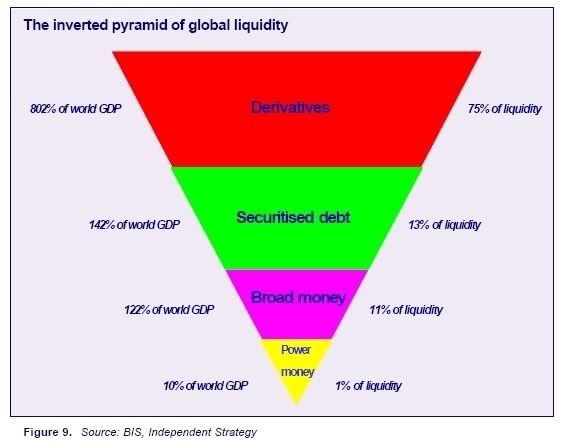
Notional Value
The total value of a leveraged position’s assets. This term is commonly used in the options, futures and currency markets because in them a very little amount of invested money can control a large position (have a large consequence for the trader).
For example, one S&P 500 Index futures contract obligates the buyer to 250 units of the S&P 500 Index. If the index is trading at $1,000, then the single futures contract is similar to investing $250,000 (250 x $1,000). Therefore, $250,000 is the notional value underlying the futures contract.
Credit Derivative
Privately held negotiable bilateral contracts that allow users to manage their exposure to credit risk. Credit derivatives are financial assets like forward contracts, swaps, and options for which the price is driven by the credit risk of economic agents (private investors or governments).
For example, a bank concerned that one of its customers may not be able to repay a loan can protect itself against loss by transferring the credit risk to another party while keeping the loan on its books.
Credit Default Swap
A swap designed to transfer the credit exposure of fixed income products between parties.
The buyer of a credit swap receives credit protection, whereas the seller of the swap guarantees the credit worthiness of the product. By doing this, the risk of default is transferred from the holder of the fixed income security to the seller of the swap.
For example, the buyer of a credit swap will be entitled to the par value of the bond by the seller of the swap, should the bond default in its coupon payments.
Sleep, or rather the lack of it makes us less able (if not downright dangerous) in the workplace according to sleep expert Dr Neil Stanley of the Norwich University Hospital. “Sleep is as important as diet and exercise when it comes to the nation’s health,” says Dr Stanley, “but we place no importance on it in our culture. When you are sleep deprived you are putting yourself in a stress situation. In our culture it is socially acceptable to have had no sleep and go into work, even though your ability to function is severely impaired and you could be dangerous.” The good doctor recommends ‘power napping’ as a way of countering the effects of too little rest. “A 20-minute nap gives you an amazing boost, it’s much better than having a coffee,” he says. “Even closing your eyes for 20 minutes is better than nothing, but in the UK it is culturally unacceptable for us to be found napping with our head on the keyboard. However, it’s fine to pump yourself with caffeine even though it it’s nowhere near as effective.” Whilst nodding off at work is still largely unacceptable here, across the world in Japan it’s almost mandatory. Know as ‘inemuri’ or ‘to be asleep while present’, the custom is seen as a demonstration of how committed you are to the job (i.e. you are exhausted because you are putting in so many hours for the company). So well regarded is inemuri that many workers apparently fake it even if they aren’t really tired just to impress their bosses. Interesting place Japan. You couldn’t make this up.
“So far, the losses reported on Wall Street are staggering. But rumors of much larger losses are being whispered…and at least one source has suggested that the firms may be bankrupt…crushed by total system-wide losses of more than $3 trillion.”
In Nassim Taleb’s definition, a “black swan” is a large-impact, hard-to-predict, and rare event beyond the realm of normal expectations. Taleb regards many scientific discoveries as black swans—”undirected” and unpredicted. He gives the September 11, 2001 attacks as an example of a Black Swan event.
The term black swan comes from the ancient Western conception that all swans were white. In that context, a black swan was a metaphor for something that could not exist. The 17th Century discovery of black swans in Australia metamorphosed the term to connote that the perceived impossibility actually came to pass.
Taleb’s Black Swan has a central and unique attribute: the high impact. His claim is that almost all consequential events in history come from the unexpected—while humans convince themselves that these events are explainable in hindsight.
Taleb believes that most people ignore “black swans” because we are more comfortable seeing the world as something structured, ordinary, and comprehensible. Taleb calls this blindness the Platonic fallacy, and argues that it leads to three distortions:
1. Narrative fallacy: creating a story post-hoc so that an event will seem to have a cause.
2. Ludic fallacy: believing that the structured randomness found in games resembles the unstructured randomness found in life. Taleb faults random walk models and other inspirations of modern probability theory for this inadequacy.
3. Statistical regress fallacy: believing that the probability of future events is predictable by examining occurrences of past events.
He also believes that people are subject to the triplet of opacity, through which history is distilled even as current events are incomprehensible. The triplet of opacity consists of
1. an illusion of understanding of current events
2. a retrospective distortion of historical events
3. an overvalue of facts, combined with an overvalue of the intellectual elite
This list of the world’s largest law firms by revenue is taken from The Lawyer and The American Lawyer and is ordered by 2006 revenue:
1. Clifford Chance, £1,030.2m – International law firm (headquartered in the UK);
2. Linklaters, £935.2m – International (UK);
3. Skadden, Arps, Slate, Meagher & Flom, £884.6m – New York City (USA);
4. Freshfields Bruckhaus Deringer, £882.1m – International (UK);
5. Latham & Watkins, £776.1m – National (USA);
6. Baker & McKenzie, £742.9m – International (USA);
7. Allen & Overy, £736.3m – International (UK);
8. Jones Day, £706.0m – National (USA);
9. Sidley Austin, £617.6m – International (USA);
10. White & Case, £574.7m – International (USA);
11. Weil, Gotshal & Manges, £558.5m – New York City (USA);
12. Mayer Brown, £538.5m – International (USA);
13. Kirkland & Ellis, £533.0m – Chicago (USA);
14. DLA Piper (USA), £489.3m – National (USA);
15. Sullivan & Cromwell, £480.8m – New York City (USA);
16. Greenberg Traurig, £472.8m – National (USA);
17. Shearman & Sterling, £458.8m – International (USA);
18. Wilmer Hale – £447.8m, Washington, D.C. (USA);
19. O’Melveny & Myers, £444.0m – Los Angeles (USA);
20. Morgan, Lewis & Bockius, £442.0m – National (USA);
21. McDermott Will & Emery, £439.3m – National (USA);
22. Cleary Gottlieb Steen & Hamilton, £417.6m – New York City (USA);
23. Gibson, Dunn & Crutcher, £409.9m – Los Angeles (USA);
24. Simpson Thacher & Bartlett, £399.5m – New York City (USA);
25. Lovells, £396.2m – International (UK);
26. Hogan & Hartson, £384.6m – National (USA);
27. Morrison & Foerster, £377.5m – San Francisco (USA);
28. DLA Piper (Europe), £366.5m – International (UK);
29. Paul, Hastings, Janofsky & Walker, £366.5m – National (USA);
30. Akin Gump Strauss Hauer & Feld, £339.6m – National (USA);
31. Foley & Lardner, £335.4m – Milwaukee (USA);
32. Davis Polk & Wardwell, £332.1m – New York City (USA);
33. Bingham McCutchen, £325.8m – National (USA);
34. Eversheds, £323.1m – International (UK);
35. Slaughter and May, £321.2m – London (UK);
36. Holland & Knight, £319.5m – National (USA);
37. Dechert , £317.0m – National (USA);
38. Pillsbury Winthrop Shaw Pittman, £315.4m – National (USA);
39. Winston & Strawn, £313.7m – Chicago (USA);
40. Paul, Weiss, Rifkind, Wharton & Garrison, £309.3m – New York City (USA);
41. Reed Smith, £309.1m – Pittsburgh (USA);
42. Ropes & Gray, £306.6m – Boston (USA);
43. Orrick, Herrington & Sutcliffe, £304.4m – San Francisco (USA);
44. Fulbright & Jaworski, £296.2m – Houston (USA);
45. Herbert Smith, £296.2m – International (UK);
46. Debevoise & Plimpton, £294.2m – New York City (USA);
47. King & Spalding, £282.7m – Atlanta (USA);
48. Vinson & Elkins, £280.2m – Houston (USA);
49. Cravath, Swaine & Moore, £275.0m – New York City (USA);
50. Milbank, Tweed, Hadley & McCloy, £272.5m – New York City (USA);
51. Cadwalader, Wickersham and Taft, £265.4m – New York City (USA);
52. Heller Ehrman, £261.0m – San Francisco (USA);
53. Hunton & Williams, £261.0m – Richmond, Virginia (USA);
54. Kirkpatrick & Lockhart Nicholson Graham – £257.71m – National (USA);
55. Arnold & Porter, £255.8m – Washington, D.C. (USA);
56. Proskauer Rose, £249.2m – New York City (USA);
57. Sonnenschein Nath & Rosenthal, £246.2m – Chicago (USA);
58. Wachtell, Lipton, Rosen & Katz, £243.4m – New York City (USA);
59. Willkie Farr & Gallagher, £243.4m – New York City (USA);
60. LeBoeuf, Lamb, Greene & MacRae, £241.8m – National (USA);
61. Baker Botts, £238.7m – Houston (USA);
62. Goodwin Procter, £228.0m – Boston (USA);
63. Simmons & Simmons, £226.9m – International (UK);
64. Wilson Sonsini Goodrich & Rosati, £226.4m – Palo Alto (USA);
65. Squire, Sanders & Dempsey, £225.3m – National (USA);
66. Bryan Cave, £219.0m – National (USA);
67. Alston & Bird, £217.0m – Atlanta (USA);
68. Dewey Ballantine, £215.7m – New York City (USA);
69. Fried, Frank, Harris, Shriver & Jacobson, £214.3m – New York City (USA);
70. Ashurst, £214.0m – International (UK);
71. Katten Muchin Rosenman, £212.4m – Chicago (USA);
72. Howrey, £211.3m – Washington, D.C. (USA);
73. Kaye Scholer, £210.7m – New York City (USA);
74. Norton Rose, £210.2m – International (UK);
75. Covington & Burling, £208.8m – Washington, D.C. (USA);
76. Nixon Peabody, £205.2m – National (USA);
77. McCarthy Tétrault, £203.8m – National (Canada);
78. Freehills, £194.8m – National (Australia);
79. Mallesons Stephen Jaques, £190.7m – National (Australia);
80. McGuireWoods, £187.4m – Richmond, Virginia (USA);
81. Seyfarth Shaw, £184.9m – National (USA);
82. CMS Cameron McKenna, £181.3m – International (UK);
83. Fidal, £181.3m – National (France);
84. Schulte Roth & Zabel, £176.4m – New York City (USA);
85. Dorsey & Whitney, £175.0m – Minneapolis (USA);
86. Perkins Coie, £174.7m – Seattle (USA);
87. Pinsent Masons, £172.0m – International (UK);
88. Minter Ellison, £171.7m – National (Australia);
89. Clayton Utz, £163.7m – National (Australia);
90. Cooley Godward, £163.7m – Palo Alto (USA);
91. Addleshaw Goddard, £161.3m – National (UK);
92. Duane Morris, £159.6m – Philadelphia (USA);
93. Jenner & Block, £158.0m – Chicago (USA);
94. Baker & Hostetler, £156.0m – Cleveland (USA);
95. Allens Arthur Robinson, £154.9m – National (Australia);
96. SJ Berwin, £154.9m – International (UK);
97. Edwards Angell Palmer & Dodge, £153.0m – Boston (USA);
98. Thelen Reid & Priest, £152.7m – San Francisco (USA);
99. Loyens & Loeff, £151.9m – Rotterdam (Netherlands);
100. Denton Wilde Sapte, £147.5m – International (UK).
MarketWatch
Jan. 15, 2008
The Singapore government’s main investment vehicle agreed to increase the amount it planned to inject into Citigroup (C:C 26.24, -0.70, -2.6%) “apparently to cover” the approximately $2 billion Citi had unsuccessfully sought from the government of China, a person familiar with the situation said Tuesday.
During most of the day, Government of Singapore Investment Corp. (GIC) was committed to invest about $4.8 billion to $5 billion in Citigroup, but later in the day apparently told Citi it would “cover” the amount of money ($1.8 billion to $2 billion) the bank had hoped to raise from the Chinese government, the person said.
GIC’s decision partly reflected GIC’s long-standing relationship with the new CEO of Citi, Vikram Pandit, the person said. GIC was an original investor in Old Lane Partners, a hedge fund Pandit co-founded; it was later bought by Citigroup.
China Development Bank’s rejection of Citi’s request emerged Monday night.
The Singapore government would consider additional investments in Citigroup “if the opportunity and the need arises,” the person said.
Singapore has two sovereign wealth funds – GIC and Temasek Holdings Pte. – which have taken stakes in troubled financial institutions in recent months.
The terms of GIC’s purchase of $6.88 billion in Citi convertible bonds reflect the cash-strapped bank’s lack of leverage: GIC said the instruments will earn a hefty 7% non-cumulative interest, payable quarterly.
The conversion premium is a fairly low 20% and is “subject to adjustment in certain limited circumstances.” However, GIC noted these instruments give “appropriate downside protection.”
The press release didn’t give further details.
All told, GIC will own 4% of Citi as a result of the transaction; it already held 0.3% of the bank. GIC said it won’t “take” a board seat at Citi. Indeed, political sensitivities have prompted sovereign wealth funds providing financial infusions to U.S. and European banks to emphasize their intended roles as passive investors.
By May Wong, Channel NewsAsia | 15 January 2008
SINGAPORE: The Government of Singapore Investment Corporation (GIC) will soon have a bigger stake in US-based Citigroup.
GIC will pump in US$6.88 billion (S$9.8 billion) into one of the world’s largest banks. This is part of Citigroup’s bid to raise US$12.5 billion of capital to boost its financial position.
GIC is the hand behind the management and enhancement of Singapore’s reserves.
That is exactly what the company is doing with its latest purchase into Citigroup. The two companies took just eight days to seal the deal.
GIC’s investment is done through a financial instrument called convertible preferred securities. This will effectively give GIC some form of protection.
For example, if Citigroup’s stock price falls, GIC does not have to convert its securities into shares and will continue to earn dividends of 7 percent.
But such a prudent investment, with lower risks, will also mean that GIC will see relatively lower returns.
In a news release, GIC’s deputy chairman and executive director, Tony Tan, said the company looks for returns on a long-term basis. He believes GIC’s latest Citigroup investment will meet that objective.
Dr Tan said: “GIC is a financial investor seeking commercial returns on a long-term basis … We believe that the investment in Citigroup will meet our long-term investment objective in terms of risk and return.”
GIC now holds 0.3% of shares in Citigroup. The new deal will bring GIC’s stake in the bank to 4% if converted to shares.
The investment will make GIC, as a single entity, one of the top five investors in Citigroup. However, GIC says it will not sit on Citigroup’s board.
GIC’s latest investment comes hot on the heels of a major deal last month, when it pumped nearly S$14 billion into the Swiss banking giant UBS.
Citigroup, Merrill Lynch Get $21 Billion From Outside Investors
By Yalman Onaran
Jan. 15 (Bloomberg) — Citigroup Inc. and Merrill Lynch & Co., two of America’s largest financial institutions, turned to outside investors for a second time in two months to replenish capital eroded by subprime mortgage losses.
Citigroup, the biggest U.S. bank, is getting $14.5 billion from investors, including the governments of Singapore and Kuwait, former Chairman Sanford Weill, and Saudi Prince Alwaleed bin Talal, the New York-based company said today in a statement. Merrill, the largest brokerage, said it’s receiving $6.6 billion from a group led by Tokyo-based Mizuho Financial Group Inc., the Kuwait Investment Authority and the Korean Investment Corp.
Wall Street banks have now received $59 billion, mostly from investors in the Middle East and Asia, to shore up balance sheets battered by more than $100 billion of writedowns from the declining values of mortgage-related assets. Citigroup was propped up in November by a $7.5 billion investment from the Abu Dhabi Investment Authority. New York-based Merrill was helped by a $5.6 billion cash infusion last month from Singapore’s Temasek Holdings Pte. and U.S. fund manager Davis Selected Advisors LP.
“The only reason the banks are raising capital from the Middle East and Asia is because those are the only people who have the excess capital to lend,” said Jon Fisher, who helps oversee $22 billion at Minneapolis-based Fifth Third Asset Management, which holds shares of Citigroup and Merrill.
Citigroup declined 68 cents to $28.38 and Merrill fell $1.25 to $54.72 in early New York trading.
The writedowns have reduced Citigroup’s so-called Tier 1 capital ratio, which regulators monitor to assess a bank’s ability to withstand loan losses. With today’s capital increase, the Tier 1 ratio would be 8.2 percent, Citigroup said, keeping it above the company’s 7.5 percent target.
`Capital at a Cost’
Morgan Stanley, UBS AG, Merrill Lynch & Co. and Bear Stearns Cos. also reached out to sovereign wealth funds or state- controlled investment authorities in Asia for money after bad investments depressed profits.
“It does show that investors aren’t completely ignoring the sector,” said Peter Plaut, a senior credit analyst at Sanno Point Capital Management, a hedge fund based in New York. “They are putting in capital but it’s at a cost. Now it’s up to the CEOs to be able to generate returns that exceed that cost of capital.”
The Kuwait Investment Authority, which invested in both Merrill and Citigroup, was formed by the Middle East’s fourth- biggest oil producing country in the 1980s to manage the nation’s wealth. Kuwait may have as much as $250 billion of assets, compared with about $875 billion for the Abu Dhabi Investment Authority, the world’s largest sovereign wealth fund, according to an estimate by Morgan Stanley analyst Stephen Jen.
Singapore, Alwaleed
The Government of Singapore Investment Corp. invested almost $7 billion in Citigroup convertible preferred securities and said in a statement today that it will own about 4 percent of the bank if the securities are turned into shares. With a 4 percent stake, Alwaleed has been Citigroup’s biggest individual shareholder since the early 1990s, when soured investments in commercial real estate left corporate predecessor Citicorp short of capital.
Singapore and Alwaleed, along with Los Angeles-based Capital Group Cos., the biggest U.S. manager of stock and bond mutual funds, Kuwait, the New Jersey Division of Investment and Weill, will receive a 7 percent annual dividend from the investment in Citigroup.
Merrill’s convertible securities will pay a 9 percent annual dividend on the securities until they automatically turn into Merrill shares in 2 3/4 years’ time. The group will get fewer shares if Merrill’s stock price climbs above $61.31 and more if it drops below $52.40, according to the company’s statement.
SEC’s Concern
Foreign investors whose stakes rise about 10 percent trigger a review by the U.S. Committee on Foreign Investment, which examines whether acquisitions by overseas buyers compromise national security.
U.S. Securities and Exchange Commission Chairman Christopher Cox said in December that the growth of state-run investment funds may lead to an increase in political corruption because governments might abuse the funds’ leverage over markets and companies.
While there may be “hand-wringing” in Washington over the investments, there won’t be an attempt to tighten rules on foreign investors, said Todd Malan, executive director of the Organization for International Investment.
“Congress realizes that we need this investment,” said Malan, whose Washington-based group represents 141 non-U.S. companies investing in the country.
The following is a table showing banks and securities firms that have sold stakes to shore up capital. All except Barclays Plc raised the cash after reporting asset writedowns and credit losses amid the collapse of the U.S. subprime mortgage market.
Firm Infusion Investor Stake
Citigroup $6.8 Government of Singapore 3.7%
Investment Corp.
7.7 Kuwait Investment Authority; not
Alwaleed bin Talal; Capital specified
Research; Capital World;
Sandy Weill; public investors.
7.5 Abu Dhabi Investment
Authority 4.9%
Merrill Lynch 6.6 Korean Investment Corp.; not
Kuwait Investment Authority; specified
Mizuho Financial Group
4.4* Temasek Holdings 9.4%**
(Singapore)
1.2 Davis Selected Advisors
(U.S.) 2.6%**
UBS 9.7 Government of Singapore
Investment Corp. 10%
1.8 Unidentified Middle Eastern
Investor 2%
Morgan Stanley 5 China Investment Corp. 9.9%
Barclays 3 China Development Bank 3.1%
2 Temasek Holdings 2.1%
Canadian Imperial 2.7 Li Ka-Shing; Manulife not
Financial; others specified
Bear Stearns 1 Citic Securities Co. 6%***
(China)
_____
TOTAL $59.4
* Temasek has an option to invest an additional $600 million.
** Estimate based on purchase price of $48 a share.
*** Citic has an option to increase its stake by as much as
3.3 percent.
Good bankers, like good tea, can only be appreciated when they are in hot water.
– Jafar Hussein, Governor, Malaysian Central Bank
Ten little Injuns standin’ in a line,
One toddled home and then there were nine;
Nine little Injuns swingin’ on a gate,
One tumbled off and then there were eight.
One little, two little, three little, four little, five little Injun boys,
Six little, seven little, eight little, nine little, ten little Injun boys.
Eight little Injuns gayest under heav’n.
One went to sleep and then there were seven;
Seven little Injuns cuttin’ up their tricks,
One broke his neck and then there were six.
Six little Injuns all alive,
One kicked the bucket and then there were five;
Five little Injuns on a cellar door,
One tumbled in and then there were four.
Four little Injuns up on a spree,
One got fuddled and then there were three;
Three little Injuns out on a canoe,
One tumbled overboard and then there were two.
Two little Injuns foolin’ with a gun,
One shot t’other and then there was one;
One little Injun livin’ all alone,
He got married and then there were none.
One little, two little, three little Indians
Four little, five little, six little Indians
Seven little, eight little, nine little Indians
Ten little Indian boys.
Ten little, nine little, eight little Indians
Seven little, six little, five little Indians
Four little, three little, two little Indians
One little Indian boy.
Get out. Everybody get out!
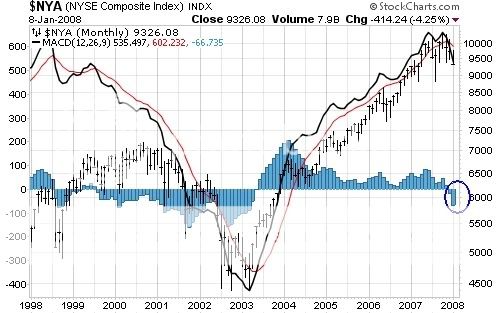
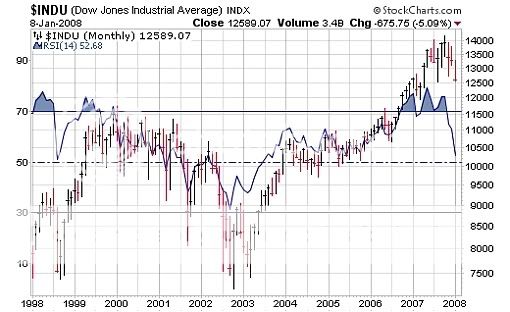
FORBES
Bernard Condon, 12.10.01
Having called the top of the gold market 22 years ago, a goldbug now thinks that he has found the bottom.
In 1977 James Sinclair boldly predicted that gold would rise from $150 per troy ounce to $900. Gold never reached that mark, but it came close on Jan. 21, 1980, peaking at $887.50. The next day, says Sinclair, he unloaded his entire gold position, personally netting $15 million. Pointing to the U.S. Federal Reserve’s efforts to fight inflation, Sinclair then predicted at an annual gold conference that the metal would languish for the next 15 years. It did. On Friday, Jan. 20, 1995, it closed at $383.85.
So this is a guy to listen to. He’s bullish again. Why? Because he believes, despite the whiff of deflation in the October producer price index, that the U.S. is headed for mild inflation. He thinks that the dollar is due for a fall. He is also impressed that mining companies, which routinely sell unmined metal forward at fixed prices to protect themselves against further price drops, have recently pulled back from placing these hedges, a move that should prompt gold prices to rise. If they do, Sinclair expects a squeeze on gold speculators, who have $36 billion in short positions. Sinclair figures that the shorts will cover their positions soon after gold hits $305, a move that could force the price to $350, even $430.
Persuaded? On the New York Mercantile Exchange you can buy an option to purchase 100 ounces of gold in six months with a strike price set at a slight premium to today’s price. An option exercisable at $300 will cost you $9 an ounce. If gold hits $350 you pocket $4,100 in profits.
Sinclair is not buying just futures and options. Since 1996 he has invested $11 million to develop 5,600 square kilometers of barren land in central Tanzania that he’s convinced hold vast gold deposits. Drilling on the property is still in the early stages, but Barrick Gold is already pulling metal from an adjacent site whose proven and probable reserves have nearly tripled to 10 million ounces in the past two and a half years.
It’s a gamble not many investors would make, but Sinclair has always stood apart from the crowd. On the walls of his office hang six photographs of Shri Sathya Sai Baba, a guru in India whom Sinclair visits several times a year. Sinclair’s love of carrot juice recently turned into a 25-kilo-a-week habit that was brought to a halt only when his doctor grew alarmed at the orange tint to his skin. A loner, Sinclair paid $3 million in 1983 to turn a 19th-century barn into a reception hall for his house but has held only three parties there.
After his 1970s career as a goldbug, Sinclair retreated to his Connecticut estate, where he played with his helicopters, show ponies and collection of Ferraris. He didn’t stay idle long. He built cable systems at Cross Country Cable, a company he started with two friends, then made millions selling some of them to John Malone’s TCI.
“Jimmy is different,” says his onetime cable partner Vincent Tese, the former New York State banking commissioner and now a Bear Stearns director. “But in the trading business people don’t care if you’re purple, just as long as you’re making money.”
In 1989 Sinclair got back into metals after buying a small stake in a Vancouver, Canada, mining company called Sutton Resources. During a trip to Tanzania for the company that year to check out a potential nickel site, Sinclair became intrigued by a 140-square-kilometer patch of land called Bulyanhulu. It was studded with greenstones, volcanic rocks marked by long seams that are often rich in minerals. Some greenstone mines, such as those in Canada’s Kirkland Lake Camp, have been yielding gold for a century and do so now at the relatively low cost of $200 an ounce.
“The opportunity stared at me as it did with cable and gold,” he says. “The only way to make big money is to have the courage to put your eggs in one basket.”
Sinclair helped Sutton buy rights to mine Bulyanhulu, then lobbied for it to do the same in adjacent lands. Sutton balked and eventually sold Bulyanhulu to Barrick. Sinclair decided to go it alone.
By the summer of 1999 he had invested $4 million in the lands near Bulyanhulu. He faced a sickening prospect. Gold had just hit a 21-year low of $246. Bears were predicting $150 soon, a price that could wipe out the profits from even the most efficient of Tanzania’s mines.
“I felt a pit in my stomach, like hunger,” Sinclair recalls. “When I was a young trader, I used to think that I was invincible. Now I feel the risk.”
Simple logic mitigated his fears. It costs most companies $250 (including back-office support) to extract an ounce of gold. With gold trading below cost, it made no sense for mining companies to hedge against further price reductions. Recognizing that such hedges meant that an important force pulling gold down would soon disappear, he reasoned that the bottom was near.
Over the next nine months Sinclair spent $1.5 million on tests that measured magnetic pull to help locate seams in his greenstone. Soon after the tests ended, in February 2000, news broke that some big mining companies had indeed stopped placing new hedges. Sinclair reached into his pocket for $5 million to buy more mining rights in surrounding lands. Barrick expects that the $199 an ounce it is paying to mine gold at Bulyanhulu will drop to $130 over the next three years.
Sinclair hopes to sell his operation to a big mining company soon. To do that he’ll need to prove that his gold can be as richly mined as it is in Bulyanhulu. And pray that bullion doesn’t plummet again.
Sinclair’s bullishness is catching on. One well-regarded bear, Andrew Smith of Mitsui, surprised the markets in September by announcing that he expects the metal to go to $340.
“You have told me about your dreams… And I am a part of your dream, a part of your destiny, as you call it.
That’s why I want you to continue toward your goal. If you have to wait until the war is over, then wait. But if you have to go before then, go on in pursuit of your dream. The dunes are changed by the wind, but the desert never changes. That’s the way it will be with our love for each other.
“Maktub,” she said. “If I am really a part of your dream, you’ll come back one day.”
MoS Int’l takes suit against S’pore licensee to High Court
By Chua Hian Hou
A LONDON-BASED nightlife company is taking its lawsuit against the firm running the Ministry of Sound (MoS) club in the Republic to Singapore’s High Court.
Ministry of Sound International earlier filed a suit against the Singapore licensee in the British courts, but it seems it has now moved this legal action over to the courts in the Republic.
The MoS outlet at Clarke Quay, which opened in 2005, is run by LB Investments, a subsidiary of listed Singapore firm LifeBrandz.
LifeBrandz told the Singapore Exchange last Friday that Ministry of Sound International has served a writ of summons on LB Investments.
It said the writ ‘alleges breaches of certain terms and conditions of a licence agreement pertaining to the ‘Ministry of Sound’ brand’.
LifeBrandz said it would ‘vigorously defend’ the ‘unmeritorious’ allegations.
The same announcement also said that Ministry of Sound International had ‘discontinued’ its ‘entire claim’ against LB Investments. These claims had been originally filed with the High Court of England and Wales in mid-November.
The lawsuit earlier filed in Britain alleged that LB Investments had violated its licensing guidelines. The alleged violations included not playing the right type of music, not maintaining a stable website and not using the right staff uniforms.
Ministry of Sound International was reportedly suing LB Investments for damages and to force it to stick to its licensing guidelines.
A LifeBrandz spokesman could not be reached for comment yesterday.
LifeBrandz shares closed unchanged at 5.5 cents yesterday.