Atheists and the Stock Market – Nassim Nicholas Taleb
Taleb’s exposition of the Ludic fallacy:
“We love the tangible, the confirmation, the palpable, the real, the visible, the concrete, the known, the seen, the vivid, the visual, the social, the embedded, the emotional laden, the salient, the stereotypical, the moving, the theatrical, the romanced, the cosmetic, the official, the scholarly-sounding verbiage, the pompous Gaussian economist, the mathematicized crap, the pomp, the Academie Francaise, Harvard Business School, the Nobel Prize, dark business suits with white shirts and Ferragamo ties, the moving discourse, and the lurid. Most of all we favor the narrated.
Alas, we are not manufactured, in our current edition of the human race, to understand abstract matters — we need context. Randomness and uncertainty are abstractions. We respect what has happened, ignoring what could have happened. In other words, we are naturally shallow and superficial — and we do not know it. This is not a psychological problem; it comes from the main property of information. The dark side of the moon is harder to see; beaming light on it costs energy. In the same way, beaming light on the unseen is costly in both computational and mental effort.”
How to choose good durian
Here is a short durian tutorial by Mr Wong who runs a small boutique durian stall at 231 East Coast Road (Opp Jago Close) Singapore. You can contact him for your durian needs by calling 97514828. At the time of blogging, his Mao Shan Wang was selling for $16 per kg. Having been in the durian trade for 20 years, he has established a good relationship with his suppliers who would pre-select all his durians so that his customers can look forward to a really good durian experience.
Source: http://ieatishootipost.sg/2008/07/durian-tutorial-made-possible-with-my.html
Short straw dims New Year glow
Short straw dims New Year glow
Fortune stick predicts worst luck for HK, and hours later fireworks barge catches fire
Mary Ann Benitez, Danny Mok and Amy Nip
SCMP Jan 28, 2009
As if recession and the prospect of a worsening economic downturn were not enough, Hong Kong yesterday drew the worst possible fortune stick in a ceremony at a Sha Tin temple.
Lau Wong-fat, chairman of rural affairs body the Heung Yee Kuk, drew the stick numbered 27 on the city’s behalf in the Taoist ceremony at the Che Kung temple.
A fortune-teller at the temple who read the stick said it showed the city could not isolate itself from the global economic turbulence, but that Hongkongers should nevertheless be cautiously optimistic.
Fung shui masters interpreted the stick’s meaning differently.
James Lee Shing-chak said it signified possible conflicts between the government and its people.
Mr Lau said: “It is a warning to all of us that only a harmonious society with people staying united can enable us to get through our challenges.”
The last time that stick was drawn, 1992, saw, among other things, the arrival of last governor Chris Patten – who unleashed fierce political strife.
When a Sha Tin district councillor drew the ill-omened stick 17 years ago, the council immediately burned it and drew another, lucky one.
Yesterday, that option was not open to Mr Lau and, rather than the stick burning, it was a barge used for the Lunar New Year fireworks display that went up in flames last night.
The barge, one of three from which fireworks were launched during the 23-minute display, burst into flames near the end of the HK$5 million spectacle that lit up Victoria Harbour. The barge’s two crewmen were rescued. No one was hurt.
Within minutes thick black smoke had engulfed the bow of the vessel. Fire boats soon doused the flames.
Teddy Ng, watching with his 19-year-old daughter, said flames engulfed at least a quarter of the barge.
Wilson Mao Wai-shing, chief executive officer of Pyro Magic Productions, which produced the show, could not be reached for comment.
A spokesman for the Leisure and Cultural Services Department said it appeared sparks falling onto the barge had started the fire.
It wasn’t the only mishap on the harbour. Earlier, a pleasure boat taking 41 people to see the fireworks sprang a leak soon after leaving the Kowloon City ferry pier.
A lucky 23,888 fireworks formed the display, which was watched by 250,000 people lining both sides of Victoria Harbour and featured the character for ox.
The crowd was much smaller than expected. A turnout similar to last year’s 400,000 had been forecast.
Spectators gasped when curtains of gold and red fireworks cascaded or comets and sparking fireflies seemed to hover on the horizon.
As well as the character for ox – which was hard to pick out – the show also featured for the first time the characters for “good luck” and the lucky numbers six, eight and 10.
Afterwards spectators were divided about the merits of the show. Some said it was small and that, because it was a windless night, smoke had blanketed the harbour by halfway through the show. An amateur photographer, C. P. Chan, said: “I took pictures and the smoke started to get in the way after just 10 photos.”
But another spectator, Lois Wong Yu-siu, 19, said: “The combination of the music and fireworks matched.”
Alex Tsang said he was disappointed because it was quite smoky.
Still, he is hopeful about the Year of the Ox.
“My new year wish is for a pay rise so that I can get married soon,” the sales representative said.
Restaurants, too, were optimistic. Several said that business was holding up during the Lunar New Year holiday.
More shops were open than a year ago, too, though there was both a positive and a negative reason for that, said Caroline Mak Sui-king, chairwoman of the Retail Management Association.
On the one hand, a rise in tourists made it more worthwhile opening, but on the other hand they were forced to open because they needed every opportunity to earn the money to pay ever higher rents, she said.
Away from the festivities, pan-democrats petitioned Chief Executive Donald Tsang Yam-kuen – who is on holiday – with their wishes for the Year of the Ox, and reminded him he had a tough year’s work ahead.
The Hong Kong Observatory issued the cold weather warning for the fifth consecutive day.
Urban temperature hovered around 12 degrees Celsius. In the northwestern New Territories they dipped to 8 degrees. Warmer weather is forecast for today.
David Roche on Asia's crisis
John Thain
Thain behaviour
FT
Published: January 23 2009 22:03 | Last updated: January 23 2009 22:03

What is it that bankers don’t get? Unable to own up to a collective failure, some still display a sense of entitlement that bears no relation to their current status as wards of the state supported by the taxpayer. Step forward John Thain.
Formerly of Goldman Sachs, he was feted just months ago for securing the sale of Merrill Lynch to Bank of America, just as Lehman Brothers crumbled into dust. BofA even paid a 70 per cent premium. Some deal. Some salvation.
It now emerges that Mr Thain brought forward about $4bn in discretionary bonuses, paying them out in the narrow window after the sale of Merrill was agreed but days before the deal was actually closed.
This wheeze went down just as Merrill headed into record $21.5bn operating losses in the fourth quarter and BofA started seeking additional taxpayers’ funds from the troubled asset relief programme to digest its acquisition.
These bonuses, moreover, came in a year when Merrill’s total operating loss was $41.2bn. Bonuses equivalent to 10 per cent of the profits would be excessive, but 10 per cent of the losses? Furthermore, reports that Mr Thain spent $1.22m doing up his office, including $1,400 on a parchment rubbish bin, after his arrival at Merrill last year will serve to feed popular perceptions that the greed and insensitivity of investment bankers knows few limits.
Whether or not the bonuses were legal – and it seems they were – outside the parallel universe of investment bankers they are seen as looting. Bankers played a very big part in setting fire to the world economy – and reaped large rewards for their recklessness. They are being supported with public money because the economy cannot work without banks, not because bankers should be a protected species.
There may be no tumbrils rolling down Wall Street or through the City of London but a backlash is building. It would be a pity if this translates into regulation more stifling than that required to restrain more foolish risk-taking. But if bankers behave like this, it certainly will.
Fat Tails

Reconnaissance

“Time spent in reconnaissance is seldom wasted.”
~ Sun Tzu
The 10 Levels of Healing
The 10 Levels of Healing
1. Awareness: Identifying with victim behavior.
2. Commitment to change old patterns and begin to practice healing tools.
3. Step by step, you begin to see results of using the tools.
4. You are now processing and integrating new insights while releasing old patterns.
5. The determination becomes stronger to create more balance in your life.
6. Increased awareness of your ability to manifest the life you deserve.
7. Self-worth expands and grows significantly.
8. You have stopped creating dramas and have drawn in mentors.
9. Confidence in handling life’s lessons.
10. Experience more pleasure, happiness, delight, clarity, and peace, in your daily life now.
Citibank

When Travelers chief executive Sandy Weill acquired Citibank for US$70bn in April 1998 he effectively forced a rewrite of the rules of financial regulation. The US system was set up in the 1930s to prevent a repeat of the crash that led to the Great Depression.
The Glass-Steagall Act kept investment banks on Wall Street separate from commercial and retail lenders on main street, so traders couldn’t bet bank deposits. It was effectively repealed during the dying days of the Clinton Presidency in November 1999.
The Citibank takeover, which brought together legendary bond trading house Salomon, acquired by Travelers in 1997, with one of America’s largest main street lenders, forced this issue out into the open.
It heralded a wave of similar deals, combining both sides of the banking business. Most notably in September 2000 Chase Manhattan bought JP Morgan for US$33bn shortly after it had snapped up UK investment bank Robert Fleming.
Soon afterwards inventive investment bankers made the most of the low interest rates put in place after the terrorist atrocities of September 11 2001 to create debt instruments that led ultimately to the current debacle.
Continue reading “Citibank”
Job Security

Andy Duguid feat. Leah – Wasted
Wasted all this time, searching
Brought me to my knees
Tell me is this real
Are you what I really see?
Wasted all night
Dreams no one could share
Wasted x 4
Dash Berlin feat. Cerf, Mitiska & Jaren – Man On The Run (Original Vocal Mix)
Vedanta
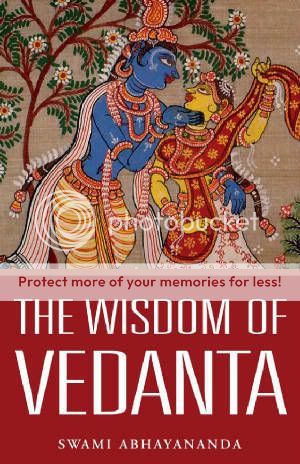
Vedanta is a spiritual tradition explained in the Upanishads that is concerned with the self-realisation by which one understands the ultimate nature of reality (Brahman) and teaches the believer’s goal is to transcend the limitations of self-identity and realize one’s unity with Brahman. Vedanta which implies “the end of all knowledge” – by definition is not restricted or confined to one book and there is no sole source for Vedantic philosophy. Vedanta is based on immutable spiritual laws that are common to religions and spiritual traditions worldwide. Vedanta as the end of knowledge refers to a state of self-realisation, attainment, or cosmic consciousness. Historically and currently Vedanta is understood as a state of transcendence and not as a concept that can be grasped by the intellect alone.
In the Bhagvad Gita, Krishna tells Arjuna, “It is better to follow your own calling imperfectly than follow another’s perfectly. If death should come while following your own path, this is surely better than living with the fear and anguish of following a false path.” (3:35)
Jim Rogers
“Be extremely skeptical, and stay with what you know. The great success stories in life are people who figure out what they know, stay with it, put their eggs in that basket and watch it very carefully. Don’t listen to me or anybody else.”
~ Jim Rogers
Super8 & Tab feat. Alyna – Delusion
Wealth
“If a man is proud of his wealth, he should not be praised until it is known how he employs it.”
~ Socrates
Ted Williams

Ted Williams was the most robust batter in baseball history. Williams discarded the strike zone and ignored umpire calls, instead creating his own personal batting zone. This was an area divided into 77 sub-sectors each the size of a baseball.
Through many trials, Williams determined that the probability distribution of him getting a hit was best in only nine of those zones. Using tremendous discipline in his set-up, he would only swing the bat if a pitch was in one of those nine zones. The results are recorded in baseball’s Hall of Fame.
If there was ever a time in market history when we all need to be Ted Williams, it’s now.
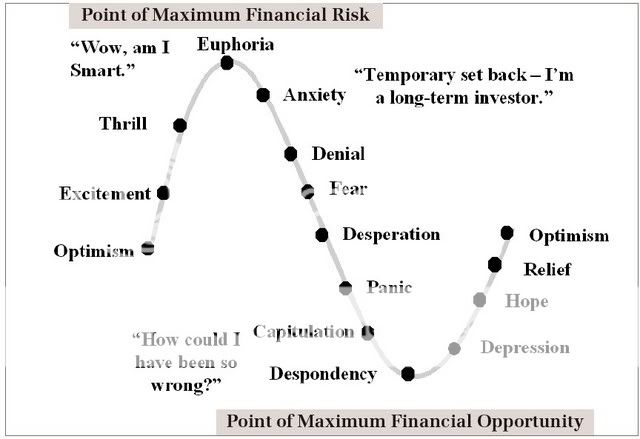
Sentiment Cycles
Shantideva: Far-reaching Mental Stability
(10) One moment, they’re friends;
In an instant, they’re enemies.
At a time for being delighted, they fall into a rage:
Ordinary beings are so difficult to please.
(11) Told what’s of benefit, they get enraged
And cause me to turn from what’s of benefit too.
But, if their words aren’t listened to,
They fall into a rage and go, then, to a worse rebirth state.
(12) They’re envious of superiors, competitive with equals,
Arrogant toward inferiors, conceited when praised,
And hateful when told what they don’t want to hear:
When is there benefit from infantile beings?
(13) If I associate with infantile people,
Then destructive behavior inevitably arises among infantile folk,
Such as praising myself and belittling others,
And prattling on about the pleasures of samsara.
(14) From entrusting myself to others in this way,
Nothing but loss comes about in the end,
For they’ll be, in fact, no-good for me
And I’ll be, in fact, no-good for them.
(15) So let me flee far away from infantile folk;
But if encountered, I’ll please them with pleasantries,
And without becoming overly familiar,
I’ll conduct myself nicely, merely as an ordinary person would.
Black Swan Revisited
The Black Swan theory (in Nassim Nicholas Taleb’s version) refers to a large-impact, hard-to-predict, and rare event beyond the realm of normal expectations. The term black swan comes from the commonplace Western cultural assumption that all swans are white. In that context, a black swan was a metaphor for something that could not exist. The 17th Century discovery of black swans in Australia metamorphosed the term to connote that the perceived impossibility actually came to pass.
In risk management, we need to deal with black swans that have consequences. Further, a search in the literature in the philosophy and history of probability shows the depressing fact that large impact events are absent from discussions. Probabilities by themselves do not matter. They can be very small, but their results are not. What matters in life is the equation probability x consequence. This point may appear to be simple, but its consequences are not.
If small probability events carry large impacts, and these small probability events are more difficult to compute from past data itself, then our empirical knowledge about the potential contribution – or role – of rare events (probability x consequence) is inversely proportional to their impact.
Machiavelli
“For the great majority of mankind are satisfied with appearances, as though they were realities, and are often more influenced by the things that seem than by those that are.”
– Niccolo Machiavelli (1469-1527)
The Thrillseekers – The Last Time
No one on earth
Could ever make me, make me feel
So loved, so complete
You and you only
The only answer to every reason that I can dream of
The one solution to every problem
That makes me crazy. That turns me inside out.
The last time we touched, the last time you held me
I was a soul in your hand
The last time we touched, the last time you held me
My life had only begun
The last time we met, and I could see you clearly
My eyes were not opened up
The last time we met, the last time I held you
I could see you clearly
Your sky is mine
I walk beneath it, not alone
When I call your name
You always answer
And every time I
Begin to doubt you
You give me more love
No hesitation
You come to me when
My heart is beating
So hard I can not breathe
You give me all I need
You give me all I need
And this is all I need
MV Faina
The MV Faina is a roll-on/roll-off cargo ship operated by a Ukrainian company that sails under a Belize flag of convenience. The Faina is owned by Waterlux AG, based in Panama City, and managed by Tomex Team in Odessa, Ukraine.

On 25 September 2008, the Faina was hijacked by approximately 50 Somali pirates calling themselves the Central Regional Coast Guard in the twenty-sixth such attack in 2008. The Faina’s crew (at the time of capture) consisted of 17 Ukrainians, three Russians and one Latvian. The ship was allegedly heading to Mombasa, Kenya, from Ukraine with 33 Soviet-made T-72 tanks, weapons (including rocket-propelled grenades and anti-aircraft guns) and ammunition on board, when it was seized. The pirates said they were unaware of the ship’s cargo before they captured it. However, the pirates claim that documents found onboard indicate that the arms cargo was destined for Juba, Southern Sudan, instead of Kenya, as originally understood. The claim was confirmed by U.S. Navy and Western intelligence officials, though the Kenyan government denies the allegation.

The pirates demanded a ransom and had threatened to blow up the ship, along with the pirates themselves and the ship’s crew, if the ransom is not paid. The ransom amount has been reported as US$35 million, US$20 million, and US$8 million in the days that the ship and its crew have been held hostage. The pirates are thought to be attempting to move toward the pirate haven of Eyl in Somalia in an attempt to unload some of the cargo there.

The U.S. Navy’s Arleigh Burke-class destroyer Howard and the Ticonderoga-class missile cruiser Vella Gulf engaged the Faina in pursuit within several hundred yards to stop the unloading of the cargo by the pirates. As of 21 October 2008, six U.S. warships have surrounded the Faina with the Russian missile frigate Neustrashimy en route.
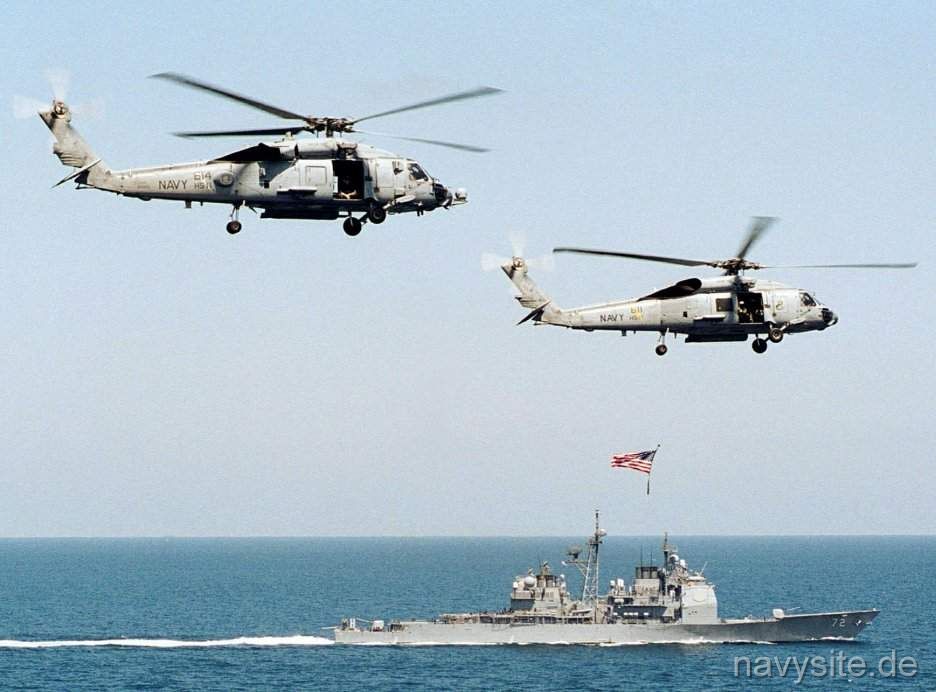
On 28 September, Viktor Nikolsky, first mate on the Faina, said that Vladimir Kolobkov, the ship’s Russian captain, had died from a hypertension-related stroke. On 5 February 2009 the MV Faina was released after being held captive for 5 months. The remaining crew of 20 were freed along with the ship and are reported by the Ukrainian presidency as being healthy and safe. A ransom of US$3,200,000 was paid on 4 February 2009 by the ship’s mysterious owners. The pirates left the vessel early next day stating that the release had been delayed for one hour, but the ship was eventually released. The ship arrived to its destination, the Port of Mombasa, on 12 February 2009, where the cargo was unloaded. The body of the captain was taken to a local morgue awaiting a shipment to Russia.
Only an A-Team will do: MM Lee
IS THERE a need for a new type of leadership to steer Singapore into the future? Or will what has worked in the past continue to work in the future?
These questions flitted through 41-year-old Jonas Ang’s mind as he sat through a dialogue at the Human Capital Summit with Minister Mentor Lee Kuan Yew yesterday.
The human resource director decided to pose them to the man most responsible for building modern Singapore.
Mr Lee’s immediate response: ‘That’s a very pertinent and deep question which I’ve asked myself.’
He said the Singaporeans of today have higher aspirations and are better educated than in the past, but that has also led some to believe that they know better than the Cabinet ministers.
‘You can see it in the letters to the press, which isn’t a bad thing provided they understand that they may not be right, because the ministers aren’t stupid,’ he said.
Changing times notwithstanding, Singapore must continue to have an A-Team of leaders in place, he added.
He said: ‘If we field a B-Team, we are in trouble. We’ve got to have an A-Team. I don’t care whether it’s the PAP (People’s Action Party) or any other party.
‘You need first-class people with good minds, a sense of obligation to do a good job for the people and the ability to execute. That’s an A-Team.’
How is an A-Team picked? MM Lee gave a peek into the process.
First, potential leaders undergo rigorous selection tests. They are then put through at least two five-year terms before they get to higher office, he said. ‘So we know that they got what it takes.’
A type of leader that Singaporeans must guard against is the glib speaker who cannot perform.
Said MM Lee: ‘That you can talk plausibly doesn’t mean you can perform effectively. They’re two different qualities. A good politician must be able to do both.’
One reason for the stringent criteria for future Singaporean leaders is the competition the country faces from up-and-coming economies like China and India, he said.
Still, there is something very much on the side of future Singapore leaders.
This is the Singapore system, characterised by traits like the rule of law, transparency, fair play and meritocracy, he said.
India and China will take at least 20 to 50 years to catch up with Singapore in this aspect, he believes.
Canadian and Singapore PR Edouard Merette, who has lived here for 12 years, agreed with MM Lee.
The peaceful, safe and efficient environment here is one reason why his company, Aon Consulting, decided to set up its regional headquarters and a research centre here.
Said Mr Merette, Aon Consulting’s CEO for Asia-Pacific: ‘Singapore is a modern society in a Third World area. You can give compliments only to Mr Lee’s leadership.’
Impediments
“The lesson is that you never know in life whether something is going to work out to your advantage, even if it seems to be a terrible impediment.”
Justice Ruth Bader Ginsburg
Legal Times, Justice Ginsburg Remembers Her First Steps in the Law, November 13, 2007
Snowflake

“No snowflake in an avalanche ever feels responsible.”
– Stanislaw Jerzy Lec, More Unkempt Thoughts (1964)
Subprime Mortgages

Accept the Rules

I will accept the rules that you feel necessary to your freedom. I am free, no matter what rules surround me. If I find them tolerable, I tolerate them; if I find them too obnoxious, I break them. I am free because I know that I alone am morally responsible for everything I do.
~ Robert A Heinlein, The Moon Is a Harsh Mistress (1966)
Black Operation

A “Black Operation” or “Black Op” is a covert operation typically involving activities that are highly secret due to questionable ethics and legality. The term itself is often used in political, military, intelligence and business circles. Agents or persons who specialise or are involved in a black operation are typically referred to as a “Black Operator” or “Black Operative.”
Black Ops missions often fall into the deniability category, where no government will claim responsibility for the action, or where responsibility is shifted to another actor in the case of a “false flag” operation.
False flag operations are covert operations conducted by governments, corporations, or other organizations, which are designed to appear as though they are being carried out by other entities. The name is derived from the military concept of flying false colors; that is, flying the flag of a country other than one’s own.