LTC Kelvin Khong pulls his F-15SG into a combat turn followed by a vertical spiral climb.
Quote of the Week
“I make no apologies that the PAP is the Government and the Government is the PAP.”
~ Lee Kuan Yew, Petir, 1982
Avoiding gossip is secret to 113-year-old's long life

An ex-Hongkonger, social worker known as ‘Mother Teresa of Singapore’ tries to keep a peaceful mind
Joyce Ng
SCMP Aug 08, 2011
Steering clear of gossip is the key to a long life, a 113-year-old Singaporean woman says.
Returning to Hong Kong in a wheelchair seven decades after she left the city, Teresa Hsu Chih said keeping a peaceful mind was her secret to longevity.
A well-known social worker in the Lion City, Hsu said she still occasionally did counselling work.
She was speaking as a guest at event held by the Hong Kong Health Care Association on Aging a few hours after flying in from Singapore.
Assisted by a care-giver, she can communicate slowly in Cantonese, Putonghua and English.
Daily meditation was also important, Hsu said.
“You just sit in peace. Think about what pain people suffer and what you can do to share your love,” she said.
Staying single may also have helped.
“I am not married. There’s no guy there to yell at me,” she said with a broad grin.
A vegetarian diet with lots of fruits is another secret to Hsu’s longevity. She starts a typical day by eating two raw eggs, with the yolk used as a facial mask. She likes soft fruits, such as melon, papaya and avocado.
Hsu said she did not have any disease common among the elderly, such as diabetes and osteoporosis.
Taking the flight yesterday, however, raised her blood pressure a little, as a doctor found when he measured it at the event.
Hsu is often referred to as the Mother Teresa of Singapore, where she started a non-governmental organisation to help the aged and sick in 1961.
She was born in 1898 in Guangdong and moved to Hong Kong aged 16, working as a cleaner while taking evening lessons in English.
During the second world war, she quit her job as a secretary and bookkeeper and went to Chongqing as a volunteer. At 47, she began to train as a nurse in Britain, where she worked for the next decade.
In 1961, she settled in Singapore and began her lifelong vocation of helping the needy.
Hsu returns to Singapore today.
Sim Kee Boon 沈基文
 Sim Kee Boon (simplified Chinese: 沈基文; pinyin: Shěn Jīwén) was one of Singapore’s pioneer civil servants – men who worked closely with the Old Guard political leaders and played a key role in the success of Changi Airport and turned the fortunes of Keppel Shipyard around.
He graduated with Bachelor of Arts (Honours) in Economics from University of Malaya in 1953, and joined the civil service that year. By 1962, at just 33, he was made acting permanent secretary in the National Development Ministry, before taking charge of the Finance Ministry as well as Intraco, the state trading company. He was also Chairman and member of the Council of Presidential Advisers.
As Permanent Secretary at the Communications Ministry from 1975 to 1984, he made his name in the history books as the man behind was then the biggest civil project in Singapore – the construction and opening of Changi Airport – managing every aspect of the project from land reclamation to squatter resettlement. To Sim, Changi Airport project was his ‘national service’ to Singapore.
When Sim was given the mammoth task, he knew little about building an airport. Yet he approached the task as a layman, often asking questions and consulting his officers and staff. His hands-on, consultative management style kept staff on their toes, making sure they understand the importance of Changi project and nothing was to be overlooked. Civil Aviation Authority of Singapore (CAAS) chairman Liew Mun Leong remembered that Sim asked for mosaic tile samples from contractors to be displayed so staff could give feedback on tiles for the airport walls.
Sim was also known for his attention to details. As Chairman of the Civil Aviation Authority of Singapore (CAAS) for 15 years from 1984, he ensured that the airport had kept up with if not, exceed world-class quality standards. From airport management software to the texture of trolley handles, he insisted every aspect of customer experience must keep up with its impressive infrastructure. The quality of toilets at the Airport was even under his radar. He was quoted saying that the first and last point of exposure to an airport is the toilet. It gives you an impression of the country.
He also introduced free local phone calls in the transit area and the famous ’12-minute rule’. This means the first bag must be ready for retrieval 12 minutes after an aircraft grounds to a halt. He would even walk around the Changi terminals frequently, instituting the habit of ‘Management by Walking Around’ in CAAS. Mr David Lum, Managing Director of Lum Chang Holdings remembered that he would make an effort to look around airport, by reaching the place one or two hours earlier and board the plane at the last minute. And finally, he also stressed that the different players – CAAS, immigration and customs authorities, airport retailers, eateries – must work together as a team for Changi to succeed.
Sim’s success in his work did not stop with the development of Changi Airport. Between the years 1984 and 1999, Sim was serving concurrently as Chairmen of Keppel Corporation and the Civil Aviation Authority of Singapore. It came to him at first, that he would end Keppel as it was making losses then. Instead he took the reins and once again demonstrated his canniness and swift in his decision-making and implementation. Mr Lim Chee Onn, who was executive chairman of Keppel Corporation at the time attributed Sim’s visionary abilities and his optimism ‘during those very trying times’ as factors which led to the renewed growth of Keppel within 5 years. With first signs of rejuvenation for Keppel, Sim diversified Keppel’s portfolios into other fields like engineering, property, financial services as well as developing shipyards in other parts of the world. Keppel Corporation had become a success story that befits the image of a Singapore business icon.
Another success story of Sim was when he was the founding chairman of Tanah Merah Country Club, where he built it from scratch on a barren land, and into one of Singapore’s best country clubs.
As Sim and his wife Jeannette were avid golfers, Tanah Merah Country Club was like his ‘second home’. He would also personally greet new Tanah Merah Country Club members. In October 2007 his illness took a turn for the worse, and had to undergo chemotherapy. Even so, Mr Edwin Khoo, committee member at the Tanah Merah Country Club, would still see Sim regularly at the club and walking with a tube under his shirt. When he could not get himself on the greens and play, Sim would still putt around and join golf buddies for drinks most weekends for two hours.
Of his contributions to the club, Mr Khoo said Mr Sim, a passionate golfer, single-handedly turned the barren land into the “best-run club in Singapore’, and was very proud of it.
“He always had a simple message for us committee members: to run this club well, and to make the best of what we can do. It was a simple but powerful message,” he said. He added that Mr Sim went to the club’s golf course every weekend for about two hours even when he could not play golf because of his failing health.
Businessman and Singapore’s Ambassador to Turkey, Mr Chandra Das, 68, who worked directly for Mr Sim when he was in the Economic Development Board in the mid-1960s and mid-1970s, said his former boss had taught him two things.
“First, there is no such thing as black or white. There are no fixed answers and there isn’t just one way of doing things. You must be flexible. There is a lot of grey. He was a specialist in the grey,” Mr Das told The Straits Times.
“The second thing he told me when I left EDB to join Intraco: He said in EDB there are two people playing chess and you are giving advice. In Intraco, you are a chess player.”
He described Mr Sim as “a very sharp and intuitive man, and a good teacher.” “He said you can make mistakes so long as you don’t repeat them. He was also very task-oriented and a stickler for work,’ added Mr Khoo.
“I remember I took a day off to go to the Registrar of Marriages to get married. After the ceremony, he called the ROM and said: Is Chandra Das there? Tell him to come back to work.”
Added Mr David Lum, managing director of Lum Chang Holdings, where Mr Sim was adviser since 2000, : ‘Whenever he’s at any airports, he would make an effort to look around. He’d try to go to the airport about one or two hours earlier and board the plane at the last minute.’
A hands-on man with exacting standards, he made frequent unannounced walks around the Changi terminals, instituting the habit of Management by Walking Around (MBW) in CAAS. The demand for the best holds true even on the greens, as the founder chairman built the Tanah Merah Country Club into one of Singapore’s best.
Said the club’s president Tan Puay Huat: ‘He’s not satisfied until everything is near perfect.’
Ms Mavis Tan, who was personal assistant to Mr Sim for 19 1/2 years since 1984 till he retired in 2000, said he was a boss with a kind heart but had high expectations of his staff, always challenging them to come up with solutions.
“I learnt a lot under him as I always had to anticipate what he would ask. It never failed to impress me that he had such wide first hand connections in the region,’ she said.
Staff at Keppel Group also said they benefited from Mr Sim’s leadership during his 16 years tenure as Group Executive Chairman.
Leading the tributes from the group, Mr Lim Chee Onn, Executive Chairman of Keppel Corporation, said: “He developed a strong and stable platform for Keppel upon which we have been able to develop and grow at a sustained pace during these last 8 years. Keppel’s success today is a result of his vision and efforts.
‘As his colleague, I have learnt much from him through his inimitable style, particularly his great sense of optimism and cheerfulness even during very trying times.’
Ms Wang Look Fung, General Manager of the group corporate communications, added: ‘Mr Sim was respected and loved. In all his years at Keppel, he has taught me always to be first a Singaporean and then a Keppelite in my thinking process because what is good for Singapore will be good for the future of Keppel. I learned a lot from one of the finest masters in the art of communication.
‘I will always remember him as one who has a meticulous attention for details as well as an infectious joire de vivre, always affable and charming to everyone he meets.’
Mr Choo Chiau Beng, Senior Executive Director of Keppel Corp, and Chairman and CEO of Keppel Offshore and Marine, said he will remember Mr Sim as a successful man who was always able to balance well the demands of business and public service with family life and a passion for golf.
“He was an excellent boss – he demanded results but was human and caring. He always kept his cool like holing the final putt in an important 18th hole!’
He died on 9 November 2007 at the Singapore General Hospital, after a 17-year battle with stomach cancer.
National Day Parade 2011 Fireworks
Ong Teng Cheong

“My loyalty is first and foremost, to the people of Singapore. It has always been so, and will always remain so.”
~ Ong Teng Cheong (1936 – 2002), in his final election broadcast speech in August 1993
Philippians 4
Finally, brothers and sisters, whatever is true, whatever is noble, whatever is right, whatever is pure, whatever is lovely, whatever is admirable — if anything is excellent or praiseworthy—think about such things. Whatever you have learned or received or heard from me, or seen in me—put it into practice. And the God of peace will be with you.
Thanks for Their Gifts
I rejoiced greatly in the Lord that at last you renewed your concern for me. Indeed, you were concerned, but you had no opportunity to show it. I am not saying this because I am in need, for I have learned to be content whatever the circumstances. I know what it is to be in need, and I know what it is to have plenty. I have learned the secret of being content in any and every situation, whether well fed or hungry, whether living in plenty or in want. I can do all this through him who gives me strength.
DJ Jose – Killer Emotion (Avi 2.0 Remix)
The Smashing Pumpkins – 1979
The Smashing Pumpkins are an American alternative rock band that formed in Chicago, Illinois in 1988. “1979” is the Smashing Pumpkins’ highest-charting single, reaching number twelve on the Billboard Hot 100 and number one on the Mainstream Rock Tracks and on the Modern Rock Tracks charts. It peaked at number fifty-four on the U.S. Hot Digital Songs in 2005, nine years after first being released. The song was nominated for the Record of the Year and Best Rock Performance by a Duo or Group with Vocal at the Grammy Awards. Pitchfork Media included the song at number 21 on their Top 200 Tracks of the 90s.
Beauty is nothing without brains
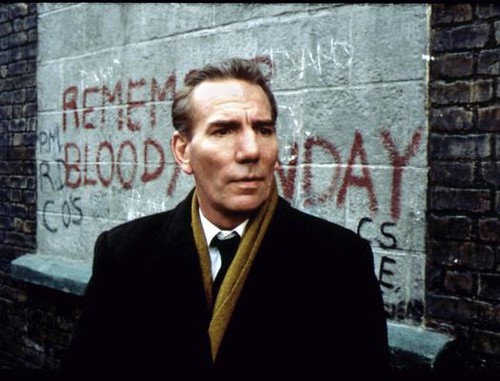
In the Name of the Father
In the Name of the Father is a 1993 biographical film directed by Jim Sheridan. It is based on the true life story of the Guildford Four, four people falsely convicted of the IRA’s Guildford pub bombings which killed four off-duty British soldiers and a civilian.
Peter William “Pete” Postlethwaite, OBE, (7 February 1946 – 2 January 2011) received an Academy Award nomination for his role in In the Name of the Father in 1993, and was made an Officer of the Order of the British Empire in the 2004 New Year’s Honours List. He died of pancreatic cancer on 2 January 2011.
Quote of the Week
“But believe you me, it only takes a few years to spend what your fathers and your forefathers have earned.”
~ Dr Lee Siew Choh (1917 – 2002)
Dr. Lee Siew Choh (simplified Chinese: 李绍祖; pinyin: Lǐ Shàozǔ; 1917 – 18 July 2002) was a politician and medical doctor from Singapore. Initially a member of the People’s Action Party (PAP), he became a leader of the breakaway Barisan Sosialis in 1961. After the Barisan Sosialis merged with the Workers’ Party in 1988, Lee stood as a Workers’ Party candidate in the 1988 general election and became Singapore’s first Non-Constituency Member of Parliament (NCMP), serving in this role until 1991.
Last Friday Night
Keenan Cahill (March 20, 1995 – December 29, 2022) was an American YouTuber and Internet celebrity who gained fame in the early 2010s for his viral videos in which he lip synced to popular songs before he went on to become a singer-songwriter and also did video collaborations with various other well known celebrities.
In July 2011, Cahill was joined backstage of Glee! Live by cast members Dianna Agron, Harry Shum, Jr., Darren Criss and Jenna Ushkowitz to lip-sync to Katy Perry’s song Last Friday Night (T.G.I.F.).
The Suncream Smokescreen

NDP 2011 Theme Song – In A Heartbeat
History may repeat in Hong Kong, beware the bubble: analyst

PRSEA | Jun 28, 2011
A seasoned property watcher has a dire warning when he looks at the current property scene in Hong Kong.
“I see history probably repeating itself and a correction looming large for the market,” said Koh Keng-shing, who has more than 30 years under his belt as a property professional.
During that time Koh was in charge of the professional services desk of First Pacific Davies (now Savills Hong Kong), and later served as valuation manager for consultancy Jones Lang Wooton (now Jones Lang LaSalle), according to the South China Morning Post.
His experience now tells him that a repeat of the 1997 market collapse could be in the future.
“Weaker than expected land auctions, tightened government measures on mortgage lending and increased land supply. Does that sound familiar?” asked Koh, noting those events foreshadowed the 1997 market collapse.
Currently running the real estate agency Landscope Realty, which he founded in 1995, Koh has been a member of the Royal Institution of Chartered Surveyors since 1990.
According to Koh a key turning point was the 9 June auction of the luxury residential site on Borrett Road.
The Borrett Road site sold at below market price estimates, and for Koh was a foreboding sign of things to come. The outcome recalled the trigger point for the 1997 market decline when a residential site in Wong Ma Kok, Stanley was sold on 3 June 1997 for HK$5.5 billion (US$706 million), 16 to 34 per cent below estimates and only 6 per cent above the opening bid.
Prior to the auction, sales volumes were regularly hitting record highs, but things quickly slid downwards, driven further by a government plan to increase land supply to increase the source of new homes to 85,000 per annum.
“Now, like then, we are seeing luxury home sales beginning to slow, even though prices remain high.”
On June 10, the government announced the launch of eight sites for sale, on which it expects developers to build 6,000 flats. The move coincided with an order from the Hong Kong Monetary Authority that banks should lend no more than 50 per cent on homes valued at above HK$10 million (US$1.3 million) (down from a cap of 60 per cent).
The authority for the first time also added tougher restrictions on non-resident borrowers. Momentum is also building for the government to revive its subsidised Home Ownership Scheme, suspended in 2002. Koh said the resumption of the scheme would shorten the cycle, bringing the correction forward into the second half of this year.
“Things have certainly taken a turn for the worse,” said Lee Wee Liat, head of regional research at Samsung Securities (Asia). The government’s willingness to resume building subsidised housing for sale, together with measures targeting foreign investment demand, showed a determination to cool the market down, he noted.
“A short-term correction is now possible,”
he said.
The latest data suggest a slowing in demand. Just 21 new homes were sold over last weekend — down from the 47 homes sold over the previous weekend, according to Samsung.
Secondary transaction volumes also fell to their lowest level so far this year, with just 21 flats sold at the 10 largest residential estates tracked by Midland Realty, down from 24 the previous weekend.
Developer Cheung Kong (Holdings) has lowered asking prices at its Uptown apartment block in Yuen Long by between 5 per cent and 8 per cent, putting new average selling prices in the range of HK$5,300 (US$681) to HK$5,500 (US$706) per sq ft, noted Lee in his latest research report.
But the pessimistic views are not shared by all industry players. Among the optimists is Nicholas Brooke, chairman of consultancy group Professional Property Services.
“Although the government intervention is likely to bring about some cooling in the short term, I think once this is absorbed by the market we will see renewed activity, albeit at a slower pace, in that the reality is that nothing has changed so far as the fundamentals are concerned,” Brooke said.
“I honestly do not foresee a bursting of the bubble as many describe it, but rather a gradual calming of the market as result of the combination of government intervention at both the supply and demand end of the equation, as well as a function of the likely hike in interest rates.
“The market will probably plateau by mid-2012 and there may be some downward adjustment thereafter, but I do not see this as major, given the wide international interest in Hong Kong real estate as a long-term investment medium,” he said.
Quote of the Week
“Don’t aim at success. The more you aim at it and make it a target, the more you will miss it. For success, like happiness, cannot be pursued; and it only does so as the unintended side effect of one’s dedication to a cause greater than oneself or as the by product of one’s surrender to a person other than oneself. Happiness must happen and the same holds for success: you have to let it happen by not caring about it. I want you to listen to what your conscience commands you to do and go on to carry it out to the best of your knowledge. Then you will live to see—in the long run, I say!—success will follow you precisely because you had forgotten to think of it.”
~ Viktor Frankl
Singapore – The Lion City, 1957
Some things never change. Some things change a lot.
Bohemian Rhapsody
“Bohemian Rhapsody” is a song by the British rock band Queen. It was written by Freddie Mercury for the band’s 1975 album A Night at the Opera. The song has no chorus, instead consisting of three main parts: a ballad segment ending with a guitar solo, an operatic passage, and a heavy rock section.
When it was released as a single, “Bohemian Rhapsody” became a huge commercial success, staying at the top of the UK Singles Chart for nine weeks and selling more than a million copies by the end of January 1976. It reached number one again in 1991 for five weeks following Mercury’s death, eventually becoming the UK’s third best selling single of all time. It topped the charts in several other world markets as well, including Canada, Australia, New Zealand, Ireland and The Netherlands. In the United States the song originally peaked at number nine in 1976; however, it returned to the chart at number two in 1992 following its appearance in the film Wayne’s World, reviving its American popularity.
Rolling Stone ranked it as the number 163 on their list of “The 500 Greatest Songs of All Time”.
Buying Insurance
This is a post by d.o.g. from the ValueBuddies forum.
WARNING: LONG POST
There are a few basic types of insurance available to the consumer:
1. Life insurance
This pays upon death or total permanent disability (TPD). It can be for a limited term i.e. 5, 10, 20 years etc, or it can be for the insured’s lifetime (whole life).
Term insurance is very cheap because it only covers the actual risk of death/TPD. Since it is pure insurance, all the premium paid is an expense and cannot be recovered. It is very useful for paying off liabilities that have a reasonably clear expiry date e.g. children graduate from university (age 25), aged parents pass away (age 100) etc.
Another reason term insurance is so cheap is because it’s a commodity – you are either dead or not dead (produce death certificate) and you are either TPD or not TPD (produce doctor’s certificate). So the insurers cannot try to mislead you with smoke and mirrors or fancy names. Delaying payout will just hurt their own reputation and future business. So they are forced to compete on price, which is a great benefit to consumers.
Term policies are usually structured so that the payments are level during the life of the policy. However, since the age of the insured will affect the odds of death/TPD, the premiums will be calculated based on the aging of the insured during the policy. A term policy of any given duration will be more expensive for an older person than a younger one.
Whole life insurance essentially splits the premium paid into 2 portions: a small part actually pays for term life insurance (and is not recovered), while the bulk of the money is invested on your behalf by the insurer. Over time, the invested money grows, while the actual insurance coverage declines. The sum of the invested money and the remaining insurance coverage forms the “sum assured”. This is not seen by the consumer – the internal offset is calculated by the insurer and only the sum assured is shown to the consumer. By the time the consumer is old e.g. age 65 there is actually little or no insurance coverage left, only the investment sum.
Endowment plans are dressed-up whole life plans where even less of the money pays for insurance. They are basically an investment product masquerading as insurance. Education plans are just endowment plans with a nice name.
Insurance-linked products (ILPs) are even more blatant investment products where as little as 1% of the money is actually used to buy insurance initially so the insurance cover is laughable, usually only 125% of the invested sum. Since your investment sum is already 100% of this amount you are only buying an additional 25% of insurance cover. More insidiously, as you get older the sum deducted for life insurance (mortality charges) goes up, so less and less of your money is invested. When you are very old the mortality charges increase exponentially and exceed your investment returns, so the total value of your investment will decline rapidly.
I have discussed term, whole life, endowment and ILP policies together because they offer varying combinations of insurance and investment. Unless you are totally incompetent at investing AND cannot find the discipline to invest in a low-cost index fund, the most sensible ratio is 100% insurance and zero investment i.e. completely separate insurance and investment.
2. Hospitalization & Surgical (H&S) Insurance
This pays hospital bills. Qualifying expenses are paid up to the limit specified in the policy. There is usually both an annual limit and a lifetime limit. Beyond these the consumer must pay, first out of Medisave and then out of pocket.
There are Shield-type plans offered by the local insurers that serve this function. The premiums can be paid out of Medisave. The limitations are that they all set a minimum bill size (excess) before the policy kicks in, and the qualifying amount is only partially reimbursed, usually 85%. So for small bills the consumer pays everything out of Medisave and his/her own pocket. Some insurers offer a rider, payable only by cash, that can pay the 15% co-payment, or cover the excess. Talk to an insurance broker if you are not clear.
There are also other non-Shield plans that do not require an excess and can pay 100% of the bill, but the premiums must be paid by cash.
H&S premiums go up as you get older to reflect the increased likelihood of hospitalization as well as the increased bill size. The Shield-type plans have lifetime coverage versions available. IMHO everyone should buy the most coverage they can afford, because (a) it’s paid from Medisave which cannot otherwise be used, and (b) coverage can be reduced in future if premiums go up, but is almost impossible to increase if illnesses strike.
3. Disability Income
This pays when you are unable to work for any reason, or when you are disabled and can only earn a fraction of your former wages. The policy kicks in after a set period, usually 60 days, and pays a percentage, often 75%, of the difference between your new wage and your old one. It will pay until you are 65. So if you earn $3,000 at age 30 and are suddenly struck down and become a quadriplegic, after 60 days the policy will kick in and pay $2,250 per month until you are 65.
This type of policy is very useful because few people finish their working life without any type of extended absence from work. So if you get into a car accident and are out of work for 6 months, you only lose 2 months of income instead of 6. In the worst case when you become a vegetable, your policy will cover your long-term care until you are 65. It is also of the greatest value at the point when you need it most – at the start of your career when your only asset is your ability to work.
Policies differ by waiting period, percentage of reimbursement and last payment. Obviously the cheapest policies will have longer waiting periods e.g. 90 days, lower reimbursement e.g. 2/3 and earlier last payments e.g. age 50.
However, it is not easy to find a good disability income policy. Some of the insurers have revised their policies for the worse. So read the fine print carefully.
Some insurers offer a “hospital income” policy which pays you a set sum for each day you are in hospital. This is basically an inferior version of disability income, since it only pays when you are in hospital and not when you are at home recovering. The sums are typically about $100 per day which will not cover the hospital bill, and there is no payment when you are recovering at home. Use H&S to cover the hospital bill, and use disability income to replace lost income. A hospital income policy is basically a waste of money.
4. Critical Illness
This policy pays upon diagnosis of the onset of any one in a set list of 30 “dread diseases”. The local insurers now use a common pool of definitions for the diseases, so it is no longer possible to shop around for the most lenient insurers. However, different insurers have different diseases in their set of 30 e.g. some may have lupus (for women) while others may not. Note that the required diagnosis can be very specific. If it says “2 or more artery blockages” and you get a heart attack involving 1 blocked artery, tough luck, there will be no payment. Once payment is made the policy expires. Some policies allow multiple claims, but this is obviously a marketing trick – you have already paid for the higher coverage in your premiums.
Since it is rare to get a dread disease without going to hospital, it is debatable whether critical illness coverage is truly useful. It CAN be useful for miscellaneous expenses like a wheelchair or a maid, but these can often be self-insured from savings. It may be OK to not have critical illness coverage. It is not OK to go without H&S coverage.
Critical illness policies come in both term, rider and whole life versions. The rider is basically an extra premium on top of an existing policy that gives the critical illness coverage. Again, if you decide to buy a critical illness plan, it is probably best to buy term. That way you get the most coverage for your dollar.
===
IMHO the order of priority for insurance expenses should be:
1. H&S
2. Disability income
3. Term life (if there are liabilties that need to be paid)
4. Critical illness (optional)
It may sound obvious, but people who do not have dependents should not buy ANY life insurance since nobody will be financially worse off if they die. Likewise there is no point buying life insurance on the life of a child, because the death of a child does not result in economic loss (emotional loss yes, but money can’t make up for that).
Also, VERY IMPORTANT: make sure that whatever H&S and critical illness policies you buy are GUARANTEED RENEWABLE, not just renewable. The reason is that H&S policies that are merely renewable (not guaranteed) will obviously not be renewed once you make a claim i.e. your coverage is one-use only. The insurer may also decline to renew your critical illness coverage if you fall ill, even if you don’t make a claim. Such “renewable” plans are MUCH cheaper and the agent may try to sell you one on the basis of affordability. DO NOT TAKE IT. Only buy GUARANTEED RENEWABLE plans.
Finally, remember that by law all regulated financial products in Singapore, including insurance, must come with a 14-day “free look” period during which you can cancel the purchase and get all your money back. No questions asked, 100% refund. So you can change your mind – but do it quick!
mrEngineer wrote:Lastly, I believe all the agents I have met have wasted my time by trying to sell me life policies. Where should I go to look for term policies? Should I go to the insurance company directly? Any recommedations from forumers?
I personally use an insurance broker. An insurance broker represents many different insurers so you can pick and choose the policy that best fits your needs. Because some insurers e.g. Great Eastern and AIA only use exclusive (tied) agents, you won’t be able to buy their policies from an insurance broker. So you may need to talk to 3 people (one broker and 2 tied agents) if you want to get a complete overview.
If you are short of time then at least talk to the insurance broker. At the least, even if you can’t get the best policies, you will avoid the worst policies.
The Guest House

This being human is a guest house.
Every morning a new arrival.
A joy, a depression, a meanness,
some momentary awareness
Welcome and entertain them all!
Even if they’re a crowd of sorrows,
who violently sweep your house
empty of furniture,
still, treat each guest honorably.
He may be clearing you out
for some new delight.
The dark thought, the shame, the malice,
meet them at the door laughing,
and invite them in.
Be grateful for whoever comes,
because each has been sent
as a guide from beyond.
– Jelaluddin Rumi (Sufi poet, 1207-1273)
List of Singapore Private Companies Offering Storage Space
1. Extra Space
www.extraspace.com.sg
Hotline: 6304 3200
Extra Space IMM Jurong Building
2 Jurong East St 21
#02-71 IMM Building
Singapore 609601
Tel: 6304 3208
Fax: 6491 1244
Email: imm@extraspace.com.sg
Extra Space Clementi Ave 6 West Coast
No. 1 Clementi Loop
#02-03
Singapore 129808
Tel: 6304 3211
Fax: 6491 1245
Email: westcoast@extraspace.com.sg
2. Store-It! Self Storage
www.store-it.com.sg
Pasir Panjang Road Facility
Harbourside 1
1 Boon Leat Terrace
Singapore 119843
Tel: 6271 2762
Fax: 6271 2393
Email: info@store-it.com.sg
3. Lock and Store
www.lockandstore.com.sg
37 Keppel Road (opp. Singapore Railway Station)
#01-03 Tanjong Pagar Distripark
Singapore 089064
Tel: 6325 7351
Fax: 6224 9041
E: info@LockAndStore.com.sg
4. Big Orange Self Storage and Warehouse Solutions Singapore
http://www.bigorange.com.sg
Big Orange Corporate Office
74B Tras Street, Singapore 079013
Tel: 1800 ORANGE = 1800 244 6726
Email: sales@bigorange.com.sg
Branches:
Big Orange at Woodlands
14 Woodlands Loop, Singapore 738363
Tel: +65 6590 3761
Email: woodlands@bigorange.com.sg
Big Orange at Bukit Batok
5 Bukit Batok Street 22, Singapore 659583
Tel: +65 6590 3762
Email: bukitbatok@bigorange.com.sg
Big Orange at Hougang
111 Defu Lane 10, Singapore 539226
Tel: +65 6590 3763
Email: hougang@bigorange.com.sg
Big Orange at Tampines
37 Tampines St 92, Singapore 528885
Tel: +65 6590 3764
Email: tampines@bigorange.com.sg
the mrbrown show: oh army!
Katy Perry – Hot N Cold
ST: Singapore workers 'world's unhappiest'
May 30, 2011
Singapore workers ‘world’s unhappiest’
Survey of 14 countries finds local employees are also the least loyal
By Melissa Ho
HATE your work? Dread going in on Monday? Considering quitting your job?
Well, you are not alone. Most of the Singapore workforce is with you, according to one survey.
A poll of employee attitudes in 14 countries has ranked Singapore last in workplace happiness. Unsurprisingly, this correlates to loyalty to employers, where Singapore is again ranked at the rear.
Talent management company Lumesse polled about 4,000 employees from a wide variety of industries.
People were asked about how happy they were at work, whether they felt their skills were properly utilised, the career paths open to them, and the training and career development opportunities they had.
The results put Singapore last in three major areas – we least enjoy going to work, are the least loyal and have the least supportive workplaces.
Only 17 per cent of Singapore’s workforce see themselves staying with their current employer forever. The global average is 35 per cent.
‘Clearly, very few employees feel bonded to their companies. This is going to be a problem as companies are not getting the full potential of workers,’ said Mr Rolf Bezemer, Lumesse’s managing director for Singapore, Malaysia and Australia.
At the same time, only 19 per cent of those polled in Singapore look forward to their work each day, compared to the global average of 30 per cent.
When it comes to positive and supportive workplaces, only a paltry 12 per cent vouch that they exist in Singapore. Globally, 20 per cent believe so.
Mr Bezemer attributes Singapore’s poor showing to the lack of transparency and consistency in workplaces here and an absence of stimulating jobs.
Ms Wong Su-Yen, senior partner and Asean managing director for human resources consultancy firm Mercer, said: ‘Strong economic growth in Singapore has led to increased job opportunities, so organisations must work harder than ever to attract and retain people.’
Mr Phillip Overmyer, chief executive at Singapore International Chamber of Commerce, agreed: ‘There are so many opportunities to be employed (in Singapore) that people don’t mind job hopping as they know they can always find something equally good, if not better, elsewhere.’
That might suggest that monetary incentives are the way forward but money does not always make the world go round.
The Lumesse survey found that Singapore performed well on pay, with 14 per cent commenting that their salaries have gone up by at least 20 per cent over five years. The global average is 9 per cent.
Yet people are still leaving.
Ms Majella Slevin, manager for secretarial and support division at human resources firm Robert Walters, added: ‘People stay in jobs also for a good work-life balance and clear career paths.’
They must also feel that they are valued employees, she added
Sales assistant Janice Lin, who turns 26 this year, ‘hopped’ five times before landing her current job.
‘It’s very common for young adults to try out different things for novelty’s sake. A lot of my friends do it,’ she said.
She estimates that an average working person like her will job-hop three times, staying in each place for about a year, before settling down.
In today’s talent-scarce society, perhaps this should be taken as only natural. Rather than fight it, embrace it.
Do not focus on seeking long-term employment from all employees, advises Mr Josh Goh, assistant director, corporate services, for HR firm The GMP Group.
Instead, he said: ‘Focus efforts on building a strong employer brand by harnessing the best from employees during their employment.’
Sugababes – Push the Button
Daniel Boone – Beautiful Sunday
Daniel Boone (born Peter Green, 31 July 1942, Birmingham, England) is a British pop musician who became a one-hit wonder in the U.S. with the single “Beautiful Sunday” in 1972.
“Beautiful Sunday” remains the biggest selling single by an international artist on the Japanese Oricon chart (coming in 19th on the all-time singles sales list with almost 2 million copies sold) and it has also become a popular song among fans of Scottish football club Dundee United.