Category: Zen
Dune 2 | Only I Will Remain
Artist: Hans Zimmer
Album: Dune Part 2
Year: 2024
00:00 Only I Will Remain
06:20 Beginnings Are Such Delicate Times
14:24 Never Lose Me
15:15 Kiss the Ring
Nature’s Patterns
7.83Hz Schumann Resonance
The Schumann Resonance signal provides a brain frequency range matching electromagnetic signal, providing the synchronization needed for intelligence. https://www.sciencedirect.com/science/article/abs/pii/S0306987703000276?via%3Dihub
Ray Dalio’s Daily Habit for 42 years
Calm at Dusk: Guided meditation and Sound Bath
What If Money Was No Object? – Alan Watts
Marconi Union – Weightless (Official Video)
Band creates the ‘most relaxing tune ever’
A British band has worked with sound therapists to create a tune described by scientists as the “most relaxing song ever”.
10:34AM BST 16 Oct 2011
Carefully arranged harmonies, rhythms and bass lines help to slow the heart rate, reduce blood pressure and lower levels of the stress hormone cortisol.
Manchester trio Marconi Union worked with sound therapists to create the soothing tune, which also slows breathing and reduces brain activity.
Scientists played the song to 40 women and found it to be more effective at helping them relax than songs by Enya, Mozart and Coldplay.
The study – commissioned by bubble bath and shower gel firm Radox Spa – found the song was even more relaxing than a massage, walk or cup of tea.
The women were connected to sensors and given challenging puzzles to complete against the clock in order to induce a level of stress.
They were then played different songs as their heart rate, blood pressure, breathing and brain activity were recorded.
Studies found Weightless was 11 per cent more relaxing than any other song and even made many of the women “drowsy” in the lab.
It induced a 65 per cent reduction in overall anxiety and brought them to a level 35 per cent lower than their usual resting rates.
The song features guitar, piano and electronic samples of natural soundscapes.
It is pierced throughout by buddhist-like chants that induce a trance-like state.
Lyz Cooper, founder of the British Academy of Sound Therapy, said Marconi Union had used scientific theory to make the “perfect relaxing song”.
She said: “The song makes use of many musical principles that have been shown to individually have a calming effect.
“By combining these elements in the way Marconi Union have has created the perfect relaxing song.
“The study found this to be the world’s most relaxing song.
“It contains a sustaining rhythm that starts at 60 beats per minute and gradually slows to around 50.
“While listening, your heart rate gradually comes to match that beat.
“It is important that the song is eight minutes long because it takes about five minutes for this process, known as entrainment, to occur.
“The fall in heart rate also leads to a fall in blood pressure.
“The harmonic intervals – or gaps between notes – have been chosen to create a feeling of euphoria and comfort.
“And there is no repeating melody, which allows your brain to completely switch off because you are no longer trying to predict what is coming next.
“Instead, there are random chimes, which helps to induce a deeper sense of relaxation.
Above & Beyond – Robot Heart Yoga – Burning Man 2014
Quote of the Week
In criticizing, the teacher is hoping to teach. That’s all.
~ Bankei
Perfect Reality

“Nothing we see or hear is perfect. But right there in the imperfection is perfect reality.”
~ Shunryu Suzuki
Snow makes Mountain
All my life false and real, right and wrong tangled.
Playing with the moon, ridiculing the wind, listening to birds….
Many years wasted seeing the mountain covered with snow.
This winter I suddenly realize snow makes mountain.
~ Dogen, translated by Kaz Tanahashi in Moon in a Dewdrop
Jesus Teaches about Worry
1) Matthew 6:25-34
“Therefore I tell you, do not worry about your life, what you will eat or drink; or about your body, what you will wear. Is not life more important than food, and the body more important than clothes?
Look at the birds in the air; they do not sow or reap or store away in barns, and yet your heavenly Father feeds them. Are you not much more valuable than they?
Who of you by worrying can add a single hour to his life?
And why do you worry about clothes? See how the lilies of the field grow. They do not labor or spin.
Yet I tell you that not even Solomon in all his splendor was not dressed like one of these.
If that is how God clothes the grass of the field, which is here today and tomorrow is thrown into the fire, will he not much more clothe you, O you of little faith?
So do not worry, saying, ‘What shall we eat?’ or ‘What shall we drink’ or ‘What shall we wear?’
For the pagans run after all these things, and your heavenly Father knows that you need them.
But seek first his kingdom and his righteousness, and all these things will be given to you as well.
Therefore do not worry about tomorrow, for tomorrow will worry about itself. Each day has enough trouble of its own.”
—
2) The Serenity Prayer by Reinhold Niebuhr
God grant me the serenity
to accept the things I cannot change;
courage to change the things I can;
and wisdom to know the difference.
Living one day at a time;
Enjoying one moment at a time;
Accepting hardships as the pathway to peace;
Taking, as He did, this sinful world
as it is, not as I would have it;
Trusting that He will make all things right
if I surrender to His Will;
That I may be reasonably happy in this life
and supremely happy with Him
Forever in the next.
Amen.
Treasury of the Eye of the True Dharma
Treasury of the Eye of the True Dharma
Book 11
Principles of Zazen
(Zazen gi)

Studying Zen is zazen. For zazen, one should have a quiet place. Spread a thick sitting mat. Do not let in drafts or vapors; do not admit rain or dew. You should secure and maintain the spot where you place yourself. There are traces from the past of those who sat on a vajra [seat] or sat on a rock; they all spread a thick layer of grass to sit on. The place where you sit should be bright; it should not be dark either day or night. The technique is to keep it warm in winter and cool in summer.
Cast aside all involvements and discontinue the myriad affairs. Good is not thought of; evil is not thought of. It is not mind, intellect or consciousness; it is not thoughts, ideas or perceptions. Do not figure to make a buddha; slough off sitting or reclining.
You should be moderate in food and drink. Hold dear the passing days and nights, and take to zazen as though brushing a fire from your head. The Fifth Ancestor on Mt. Huangmei worked only at zazen, without any other other occupation.
During zazen, you should wear your kesa. Put down a cushion. The cushion is not placed completely under your crossed legs but only under the rear half, so that the mat is beneath the legs and the cushion beneath the spine. This is the way that all the buddhas and ancestors have sat during zazen.
Sit in either the half lotus or full lotus position. For the full lotus position, place your right foot on your left thigh and your left foot on your right thigh. The toes should be even with the thighs, not out of alignment. For the half lotus position, simply place your left foot on your right thigh.
Loosen your robe and underwaist, and arrange them properly. Place your right hand on your left foot and your left hand on your right hand. Put the tips of your thumbs together. With your hands in this position, place them against your body, so that that the joined thumb tips are aligned with your navel.
Straighten your body and sit erect. Do not lean to the left or right; do not bend forward or back. The ears should always be aligned with the shoulders, and the nose aligned with the navel. The tongue should be placed against the front of the palate. The breath should pass through the nose. The lips and teeth should be closed. The eyes should be open, neither too widely nor too narrowly.
Having thus regulated body and mind, take a breath and exhale fully. Sitting fixedly, think of not thinking. How do you think of not thinking? Nonthinking. This is the art of zazen.
Zazen is not the practice of dhyâna. It is the dharma gate of great ease and joy. It is undefiled practice and verification.
Treasury of the Eye of True Dharma, Principles of Zazen, Number 11.
Quote of the Week
“This was a very typical time [1982]. I was single. All you needed was a cup of tea, a light, and your stereo, you know, and that’s what I had.”
~ Steve Jobs
Lighthouse Family – High
Lighthouse Family are a British musical duo that rose to prominence in the mid-1990s and remained active until the early 2000s. Vocalist Tunde Baiyewu and keyboard player Paul Tucker formed the act in 1993 in Newcastle upon Tyne, UK after meeting while studying at university. Their 1995 debut album Ocean Drive sold more than 1.8 million copies in the UK alone and established them as a popular easy listening duo throughout Europe.
They are well known for their songs: “Lifted”, “Ocean Drive”, “Raincloud” and “High”, which also reached number one on the Australian Singles Chart.
Avoiding gossip is secret to 113-year-old's long life

An ex-Hongkonger, social worker known as ‘Mother Teresa of Singapore’ tries to keep a peaceful mind
Joyce Ng
SCMP Aug 08, 2011
Steering clear of gossip is the key to a long life, a 113-year-old Singaporean woman says.
Returning to Hong Kong in a wheelchair seven decades after she left the city, Teresa Hsu Chih said keeping a peaceful mind was her secret to longevity.
A well-known social worker in the Lion City, Hsu said she still occasionally did counselling work.
She was speaking as a guest at event held by the Hong Kong Health Care Association on Aging a few hours after flying in from Singapore.
Assisted by a care-giver, she can communicate slowly in Cantonese, Putonghua and English.
Daily meditation was also important, Hsu said.
“You just sit in peace. Think about what pain people suffer and what you can do to share your love,” she said.
Staying single may also have helped.
“I am not married. There’s no guy there to yell at me,” she said with a broad grin.
A vegetarian diet with lots of fruits is another secret to Hsu’s longevity. She starts a typical day by eating two raw eggs, with the yolk used as a facial mask. She likes soft fruits, such as melon, papaya and avocado.
Hsu said she did not have any disease common among the elderly, such as diabetes and osteoporosis.
Taking the flight yesterday, however, raised her blood pressure a little, as a doctor found when he measured it at the event.
Hsu is often referred to as the Mother Teresa of Singapore, where she started a non-governmental organisation to help the aged and sick in 1961.
She was born in 1898 in Guangdong and moved to Hong Kong aged 16, working as a cleaner while taking evening lessons in English.
During the second world war, she quit her job as a secretary and bookkeeper and went to Chongqing as a volunteer. At 47, she began to train as a nurse in Britain, where she worked for the next decade.
In 1961, she settled in Singapore and began her lifelong vocation of helping the needy.
Hsu returns to Singapore today.
On Thrift : MM Lee Kuan Yew
‘I see no reason why I should impress people by having a big car or changing my suits every now and again to keep up with the latest styles.’
MM Lee is known in Singapore for his simple, down-to-earth lifestyle. He lives in a house which has not been renovated for decades in Oxley Road, prime real estate in the city area. He wears the same worsted wool suits when travelling on planes to go overseas. He was, in a sense, an ecologically conscious consumer long before such a concept became fashionable. Never in favour of the disposable society, he believes in the value of thrift, not over-consuming resources. The day this interview took place, he was wearing a jacket so old, he confessed that the man who tailored it for him had died. His lifestyle is so spartan, he considers it an extravagance for the Prime Minister to wear a new shirt each year for the National Day Rally.
Do you try to recycle?
We haven’t got the system of different dustbins for different items. Our people have yet to understand and would not be able to do it: Bottles, tins, food go into different chutes and bags. We’ll get there sometime.
Another part of being environmentally conscious is not to consume so much, and you’re not particularly a great consumer?
No, I’m not. I eat less, I travel less. I wonder whether I’m right in buying my car. Even if I travelled by the best Mercedes-Benz taxi limousine, it’ll cost me less than what my Lexus is costing me every day. Except that I don’t know what time I’m going to wake up, and take the one kilometre to office, one kilometre back. My car is five years old and it’s only done 20,000km.
In photographs we can see that your wardrobe, your shirts, seem to have been kept for years, decades. You don’t throw away your stuff.
Why should I throw something away which I’m comfortable with? I’m not interested in impressing anybody.
I had a supervisor who taught me criminal law. He used to be a lecturer but, you know, he became old, so he only did supervisions and he had a fireplace that did not give out any smoke because he was gassed in the First World War, and he had a lung problem. He also had a large family. He had leather patches on his coat elbows, knees of his trousers. One student was bold enough to ask him, ‘Sir, are you lacking in clothing?’ He took it gracefully. He laughed and said, ‘That college porter at the gate has to be dressed well. He wears a top hat, always to look smart. I don’t have to dress to impress anybody.’
As I listened to that, I said, ‘It’s inverted snobbery.’ But it makes sense. I see no reason why I should impress people by having a big car or changing my suits every now and again to keep up with the latest styles.
The trouble is my wardrobe is now full up. I’ve got many new suits that are absolutely in good condition because I seldom wear them. I don’t go to office every day wearing a suit, except for formal functions or when I am abroad. They are of finest worsted wool. In fact, the older I get, the less willing I am to spend time putting on a suit and tie. I just have a blouson or a buttoned-up Chinese jacket, and it saves a lot of trouble. I have had them for many years and they are very comfortable.
Isn’t it a virtue though?
No, it is not. You may say it’s a virtue, others think, why is this chap that thrifty? Watch other prime ministers. They always have new ties, new shirts and suits to look good on TV.
I mean, you look at our Prime Minister. He wears a new shirt every year for the National Day Rally. Look, I have no reason to want to impress anybody.
May I ask, how many years have you had your jacket?
This one? It’s a very comfortable jacket. The man who tailored it for me is dead.
How many years have you had it?
I can’t remember now. Nearly two decades or 15 years. And it’s very comfortable.
Pointing Out the Dharmakaya
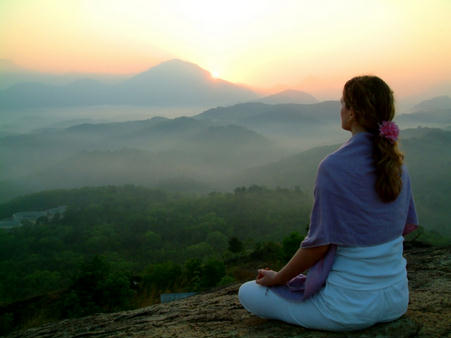
“If you continue to practice meditation, then your experience will gradually increase and there will be greater and greater stability and greater and greater lucidity. However, the experiences that can arise in meditation can take various different forms. And in spite of the fact that the person has a real recognition of the mind’s nature, there is still the possibility or probability of fluctuation in experience even after that.
Sometimes you may feel that you have amazing, tremendous meditation, and at other times you may feel that you have no meditation at all. This characterizes meditation experience, which fluctuates a great deal. Realization, which is distinct from experience, does not change, but experiences can fluctuate a great deal or alternate between good and bad. There will still be times when you will have what you regard as good experiences and, in contrast, what you regard as bad experiences. When that occurs, just keep on looking. Don’t get distracted or sidetracked by the experience. Whatever meditation experience arises, you should recognize that it is transitory. As is said, “meditation experience is like mist, it will surely vanish.”
Experiences are different from the actual fact of the recognition itself. Because they are ephemeral experiences, they aren’t worth investing in. So if you have a bad meditation experience, do not be alarmed, because it too will vanish. If you have a good meditation experience, you need to continue; if you have a bad meditation experience, you need to continue. In either case, you simply need to continue to rest in this recognition of the mind’s nature.”
~ from Pointing Out the Dharmakaya by Khenchen Thrangu Rinpoche, foreword by the Dalai Lama, introduction by Lama Tashi Namgyal, published by Snow Lion Publications
IHT and NYT Interview Lee Kuan Yew
The following is the transcript of the interview Seth Mydans had with Minister Mentor Lee Kuan Yew, for the New York Times and the International Herald Tribune. The interview was held on 1 September 2010.
Mr Lee: “Thank you. When you are coming to 87, you are not very happy..”
Q: “Not. Well you should be glad that you’ve gotten way past where most of us will get.”
Mr Lee: “That is my trouble. So, when is the last leaf falling?”
Q: “Do you feel like that, do you feel like the leaves are coming off?”
Mr Lee: “Well, yes. I mean I can feel the gradual decline of energy and vitality and I mean generally every year when you know you are not on the same level as last year. But that is life.”
Q: “My mother used to say never get old.”
Mr Lee: “Well, there you will try never to think yourself old. I mean I keep fit, I swim, I cycle.”
Q: “And yoga, is that right? Meditation?”
Mr Lee: “Yes.”
Q: “Tell me about meditation?”
Mr Lee: “Well, I started it about two, three years ago when Ng Kok Song, the Chief Investment Officer of the Government of Singapore Investment Corporation, I knew he was doing meditation. His wife had died but he was completely serene. So, I said, how do you achieve this? He said I meditate everyday and so did my wife and when she was dying of cancer, she was totally serene because she meditated everyday and he gave me a video of her in her last few weeks completely composed completely relaxed and she and him had been meditating for years. Well, I said to him, you teach me. He is a devout Christian. He was taught by a man called Laurence Freeman, a Catholic. His guru was John Main a devout Catholic. When I was in London, Ng Kok Song introduced me to Laurence Freeman. In fact, he is coming on Saturday to visit Singapore, and we will do a meditation session. The problem is to keep the monkey mind from running off into all kinds of thoughts. It is most difficult to stay focused on the mantra. The discipline is to have a mantra which you keep repeating in your innermost heart, no need to voice it over and over again throughout the whole period of meditation. The mantra they recommended was a religious one. Ma Ra Na Ta, four syllables. Come To Me Oh Lord Jesus. So I said Okay, I am not a Catholic but I will try. He said you can take any other mantra, Buddhist Om Mi Tuo Fo, and keep repeating it. To me Ma Ran Na Ta is more soothing. So I used Ma Ra Na Ta. You must be disciplined. I find it helps me go to sleep after that. A certain tranquility settles over you. The day’s pressures and worries are pushed out. Then there’s less problem sleeping. I miss it sometimes when I am tired, or have gone out to a dinner and had wine. Then I cannot concentrate. Otherwise I stick to it.”
Q: “So…”
Mr Lee: “.. for a good meditator will do it for half-an-hour. I do it for 20 minutes.”
Q: “So, would you say like your friend who taught you, would you say you are serene?”
Mr Lee: “Well, not as serene as he is. He has done it for many years and he is a devout Catholic. That makes a difference. He believes in Jesus. He believes in the teachings of the Bible. He has lost his wife, a great calamity. But the wife was serene. He gave me this video to show how meditation helped her in her last few months. I do not think I can achieve his level of serenity. But I do achieve some composure.”
Q: “And do you find that at this time in your life you do find yourself getting closer to religion of one sort or another?”
Mr Lee: “I am an agnostic. I was brought up in a traditional Chinese family with ancestor worship. I would go to my grandfather’s grave on All Soul’s Day which is called “Qingming”. My father would bring me along, lay out food and candles and burn some paper money and kowtow three times over his tombstone. At home on specific days outside the kitchen he would put up two candles with my grandfather’s picture. But as I grew up, I questioned this because I think this is superstition. You are gone, you burn paper money, how can he collect the paper money where he is? After my father died, I dropped the practice. My youngest brother baptised my father as a Christian. He did not have the right to. He was a doctor and for the last weeks before my father’s life, he took my father to his house because he was a doctor and was able to keep my father comforted. I do not know if my father was fully aware when he was converted into Christianity.”
Q: “Converted your father?”
Mr Lee: “Yes.”
Q: “Well this happens when you get close to the end.”
Mr Lee: “Well, but I do not know whether my father agreed. At that time he may have been beyond making a rational decision. My brother assumed that he agreed and converted him.”
Q: “But…”
Mr Lee: “I am not converted.”
Q: “But when you reach that stage, you may wonder more than ever what is next?”
Mr Lee: “Well, what is next, I do not know. Nobody has ever come back. The Muslims say that there are seventy houris, beautiful women up there. But nobody has come back to confirm this.”
Q: “And you haven’t converted to Islam, knowing that?”
Mr Lee: “Most unlikely. The Buddhist believes in transmigration of the soul. If you live a good life, the reward is in your next migration, you will be a good being, not an ugly animal. It is a comforting thought, but my wife and I do not believe in it. She has been for two years bed-ridden, unable to speak after a series of strokes. I am not going to convert her. I am not going to allow anybody to convert her because I know it will be against what she believed in all her life. How do I comfort myself? Well, I say life is just like that. You can’t choose how you go unless you are going to take an overdose of sleeping pills, like sodium amytal. For just over two years, she has been inert in bed, but still cognitive. She understands when I talk to her, which I do every night. She keeps awake for me; I tell her about my day’s work, read her favourite poems.”
Q: ‘And what kind of books do you read to her?”
Mr Lee: “So much of my time is reading things online. The latest book which I want to read or re-read is Kim. It is a beautiful of description of India as it was in Kipling’s time. And he had an insight into the Indian mind and it is still basically that same society that I find when I visit India. “
Q: “When you spoke to Time Magazine a couple of years ago, you said Don Quixote was your favourite?”
Mr Lee: “Yes, I was just given the book, Don Quixote, a new translation.”
Q: “But people might find that ironic because he was fantasist who did not realistically choose his projects and you are sort of the opposite?”
Mr Lee: “No, no, you must have something fanciful and a flight of fancy. I had a colleague Rajaratnam who read Sci-Fi for his leisure.”’
Q: “And you?”:
Mr Lee: “No, I do not believe in Sci-Fi.”
Q: “But you must have something to fantasise.”
Mr Lee: “Well, at the moment, as I said, I would like to read Kim again. Why I thought of Kim was because I have just been through a list of audio books to choose for my wife. Jane Austen, Emily Bronte, books she has on her book shelf. So, I ticked off the ones I think she would find interesting. The one that caught my eye was Kim. She was into literature, from Alice in Wonderland, to Adventures with a Looking Glass, to Jane Austen’s Persuasion, Pride and Prejudice, and Sense and Sensibility. Jane Austen was her favourite writer because she wrote elegant and leisurely English prose of the 19th century. The prose flowed beautifully, described the human condition in a graceful way, and rolls off the tongue and in the mind. She enjoyed it. Also Chaucer’s Canterbury Tales. She was an English Literature major.”
Q: “You are naming books on the list, not necessarily books you have already read, yes?”
Mr Lee: “I would have read some of them.”
Q: “Like a Jane Austen book, or Canterbury Tales?”
Mr Lee: “No, Canterbury Tales, I had to do it for my second year English Literature course in Raffles College. For a person in the 15th Century, he wrote very modern stuff. I didn’t find his English all that archaic. I find those Scottish poets difficult to read. Sometimes I don’t make sense of their Scottish brogue. My wife makes sense of them. Then Shakespeare’s sonnets.”
Q: “You read those?”
Mr Lee: “I read those sonnets when I did English literature in my freshman’s year. She read them.”
Q: “When you say she reads them now, you’re the one who reads them, yes?”
Mr Lee: “Yes, I read them to her.”
Q: “But you go to her.”
Mr Lee: “Yes, I read from an Anthology of Poems which she has, and several other anthologies. So I know her favourite poems. She had flagged them. I read them to her.”
Q: “She’s in the hospital? You go to the hospital?”
Mr Lee: “No, no, she’s at home. We’ve got a hospital bed and nurses attending to her. We used to share the same room. Now I’m staying in the next room. I have to get used to her groans and grunts when she’s uncomfortable from a dry throat and they pump in a spray moisture called “Biothene” which soothes her throat, and they suck out phlegm. Because she can’t get up, she can’t breathe fully. The phlegm accumulates in the chest but you can’t suck it out from the chest, you’ve got to wait until she coughs and it goes out to her throat. They suck it out, and she’s relieved. They sit her up and tap her back. It’s very distressing, but that’s life.”
Q: “Yes, your daughter on Sunday wrote a moving column, movingly about the situation referring to you.”
Mr Lee: “How did you come to read it?”
Q: “Somebody said you’ve got to read that column, so I read it.”
Mr Lee: “You don’t get the Straits Times.”
Q: “I get it online actually. I certainly do, I follow Singapore online and she wrote that the whole family suffers of course from this and she wrote the one who’s been hurting the most and is yet carrying on stoically is my father.”
Mr Lee: “What to do? What else can I do? I can’t break down. Life has got to go on. I try to busy myself, but from time to time in idle moments, my mind goes back to the happy days we were up and about together.”
Q: “When you go to visit her, is that the time when your mind goes back?”
Mr Lee: “No, not then. My daughter’s fished out many old photographs for this piece she wrote and picked out a dozen or two dozen photographs from the digital copies which somebody had kept at the Singapore Press Holdings. When I look at them, I thought how lucky I was. I had 61 years of happiness. We’ve got to go sometime, so I’m not sure who’s going first, whether she or me. So I told her, I’ve been looking at the marriage vows of the Christians. The best I read was,” To love, to hold and to cherish, in sickness and in health, for better or for worse, till death do us part.” I told her I would try and keep you company for as long as I can. She understood.”
Q: “Yes, it’s been really.”
Mr Lee: “What to do? What can you do in this situation? I can say get rid of the nurses. Then the maids won’t know how to turn her over and then she gets pneumonia. That ends the suffering. But human beings being what we are, I do the best for her and the best is to give her a competent nurse who moves her, massages her, turns her over, so no bed sores. I’ve got a hospital bed with air cushions so no bed sores. Well, that’s life. Make her comfortable.”
Q: “And for yourself, you feel the weight of age more than you have in the past?”
Mr Lee: “I’m not sure. I marginally must have. It’s stress. However, I look at it, I mean, it’s stress. That’s life. But it’s a different kind of stress from the kind of stress I faced, political stresses. Dire situations for Singapore, dire situations for myself when we broke off from Malaysia, the Malays in Singapore could have rioted and gone for me and they suddenly found themselves back as a minority because the Tunku kicked us out. That’s different, that’s intense stress and it’s over but this is stress which goes on. One doctor told me, you may think that when she’s gone you’re relieved but you’ll be sad when she’s gone because there’s still the human being here, there’s still somebody you talk to and she knows what you’re saying and you’ll miss that. Well, I don’t know, I haven’t come to that but I think I’ll probably will because it’s now two years, May, June, July, August, September, two years and four months. It’s become a part of my life.”
Q: “She’s how old now?”
Mr Lee: “She’s two-and-a-half years older than me, so she’s coming on to 90.”
Q: “But you did make a reference in an interview with Time magazine to something that goes beyond reason as you put it. You referred to the real enemy by Pierre D’Harcourt who talked about people surviving the Nazi, it’s better that they have something to believe in.”
Mr Lee: “Yes, of course.”
Q: “And you said that the Communists and the deeply religious fought on and survived. There are some things in the human spirit that are beyond reason.”
Mr Lee: “I believe that to be true. Look, I saw my friend and cabinet colleague who’s a deeply religious Catholic. He was Finance Minister, a fine man. In 1983, he had a heart attack. He was in hospital, in ICU, he improved and was taken out of ICU. Then he had a second heart attack and I knew it was bad. I went to see him and the priest was giving him the last rites as a Catholic. Absolutely fearless, he showed no distress, no fear, the family was around him, his wife and daughters, he had four daughters. With priest delivering the last rites, he knew he was reaching the end. But his mind was clear but absolutely calm.”
Q: “Well, I am more like you. We don’t have something to cling to.”
Mr Lee: “That’s our problem.”
Q: “But also the way people see you is supremely reasonable person, reason is the ultimate.”
Mr Lee: “Well, that’s the way I’ve been working.”
Q: “Well, you did mention to Tom Plate, they think they know me but they only know the public me?”
Mr Lee: “Yeah, the private view is you have emotions for your close members of your family. We are a close family, not just my sons and my wife and my parents but my brothers and my sister. So my youngest brother, a doctor as I told you, he just sent me an email that my second brother was dying of a bleeding colon, diverticulitis. And later the third brother now has got prostate cancer and has spread into his lymph nodes. So I asked what’re the chances of survival. It’s not gotten to the bones yet, so they’re doing chemotherapy and if you can prevent it from going into the bones, he’ll be okay for a few more years. If it does get to the bones, then that’s the end. I don’t think my brother knows. But I’ll probably go and see him.”
Q: “But you yourself have been fit. You have a stent, you had heart problem late last year but besides that do you have ailments?”
Mr Lee: “Well, aches and pains of a geriatric person, joints, muscles but all non-terminal. I go in for a physiotherapy, maintenance once a week, they give me a rub over because when I cycle, my thighs get sore, knees get a little painful, and so the hips.”
Q: “These are the signs of age.”
Mr Lee: “Yeah, of course.”
Q: “I’m 64. I’m beginning to feel that and I don’t like it and I don’t want to admit to myself.”
Mr Lee: “But if you stop exercising, you make it worse. That’s what my doctors tell me, just carry on. When you have these aches and pains, we’ll give you physiotherapy. I’ve learnt to use heat pads at home. So after the physiotherapy, once a week, if I feel my thighs are sore, I just have a heat pad there. You put in the microwave oven and you tie it around your thighs or your ankles or your calves. It relieves the pain.”
Q: “So you continue to cycle.”
Mr Lee: “Oh yeah.”
Q: “Treadmill?
Mr Lee: “No, I don’t do the treadmill. I walk but not always. When I’ve cycled enough I don’t walk.”
Q: “That’s your primary exercise, swimming?”
Mr Lee: “Yeah, I swim everyday, it’s relaxing.”
Q: “What other secrets, I see you drink hot water?”
Mr Lee: “Yes.”
Q: “Tell me about it.”
Mr Lee: “Well, I used to drink tea but tea is a diuretic, but I didn’t know that. I used to drink litres of it. In the 1980s, I was having a conference with Zhou Ziyang who was then Secretary-General of the Communist Party in the Great Hall of the People. The Chinese came in and poured more tea and hot water. I was scoffing it down because it kept my throat moistened, my BP was up because more liquid was in me. Halfway through, I said please stop. I’m dashing off. I had to relief myself. Then my doctors said don’t you know that tea is a diuretic? I don’t like coffee, it gives me a sour stomach, so okay, let’s switch to water.”
Q: “You know you had the hot water when I met you a couple of years ago and after I told my wife about that, she switched to hot water. She’s not sure why except that you drink hot water, so she’s decided to.”
Mr Lee: “Well, cold water, this was from my ENT man. If you drink cold water, you reduce the temperature of your nasal passages and throat and reduce your resistance to coughs and colds. So I take warm water, body temperature. I don’t scald myself with boiling hot water. I avoid that. But my daughter puts blocks of ice into her coffee and drinks it up. She’s all right, she’s only 50-plus.
Q: “Let me ask a question about the outside world a little bit. Singapore is a great success story even though people criticize this and that. When you look back, you can be proud of what you’ve done and I assume you are. Are there things that you regret, things that you wished you could achieve that you couldn’t?”
Mr Lee: “Well, first I regret having been turfed out of Malaysia. I think if the Tunku had kept us together, what we did in Singapore, had Malaysia accepted a multiracial base for their society, much of what we’ve achieved in Singapore would be achieved in Malaysia. But not as much because it’s a much broader base. We would have improved inter-racial relations and an improved holistic situation. Now we have a very polarized Malaysia, Malays, Chinese and Indians in separate schools, living separate lives and not really getting on with one another. You read them. That’s bad for us as close neighbours.”
Q: “So at that time, you found yourself with Singapore and you have transformed it. And my question would be how do you assess your own satisfaction with what you’ve achieved? What didn’t work?”
Mr Lee: “Well, the greatest satisfaction I had was my colleagues and I, were of that generation who were turfed out of Malaysia suffered two years under a racial policy decided that we will go the other way. We will not as a majority squeeze the minority because once we’re by ourselves, the Chinese become the majority. We made quite sure whatever your race, language or religion, you are an equal citizen and we’ll drum that into the people and I think our Chinese understand and today we have an integrated society. Our Malays are English-educated, they’re no longer like the Malays in Malaysia and you can see there are some still wearing headscarves but very modern looking.”
Q: “That doesn’t sound like a regret to me.”
Mr Lee: “No, no, but the regret is there’s such a narrow base to build this enormous edifice, so I’ve got to tell the next generation, please do not take for granted what’s been built. If you forget that this is a small island which we are built upon and reach a 100 storeys high tower block and may go up to 150 if you are wise. But if you believe that it’s permanent, it will come tumbling down and you will never get a second chance.”
Q: “I wonder if that is a concern of yours about the next generation. I saw your discussion with a group of young people before the last election and they were saying what they want is a lot of these values from the West, an open political marketplace and even playing field in all of these things and you said well, if that’s the way you feel, I’m very sad.”
Mr Lee: “Because you play it that way, if you have dissension, if you chose the easy way to Muslim votes and switch to racial politics, this society is finished. The easiest way to get majority vote is vote for me, we’re Chinese, they’re Indians, they’re Malays. Our society will be ripped apart. If you do not have a cohesive society, you cannot make progress.”
Q: “But is that a concern that the younger generation doesn’t realize as much as it should?”
Mr Lee: “I believe they have come to believe that this is a natural state of affairs, and they can take liberties with it. They think you can put it on auto-pilot. I know that is never so. We have crafted a set of very intricate rules, no housing blocks shall have more than a percentage of so many Chinese, so many percent Malays, Indians. All are thoroughly mixed. Willy-nilly, your neighbours are Indians, Malays, you go to the same shopping malls, you go to the same schools, the same playing fields, you go up and down the same lifts. We cannot allow segregation.”
Q: “There are people who think that Singapore may lighten up a little bit when you go, that the rules will become a little looser and if that happens, that might be something that’s a concern to you.”
Mr Lee: “No, you can go looser where it’s not race, language and religion because those are deeply gut issues and it will surface the moment you start playing on them. It’s inevitable, but on other areas, policies, right or wrong, disparity of opportunities, rich and poor, well go ahead. But don’t play race, language, religion. We’ve got here, we’ve become cohesive, keep it that way. We’ve not used Chinese as a majority language because it will split the population. We have English as our working language, it’s equal for everybody, and it’s given us the progress because we’re connected to the world. If you want to keep your Malay, or your Chinese, or your Tamil, Urdu or whatever, do that as a second language, not equal to your first language. It’s up to you, how high a standard you want to achieve.”
Q: “The public view of you is as a very strict, cerebral, unsentimental. Catherine Lim, “an authoritarian, no-nonsense manner that has little use for sentiment”.”
Mr Lee: “She’s a novelist, therefore, she simplifies a person’s character, make graphic caricature of me. But is anybody that simple or simplistic?”
Q: “Sentiment though, you don’t show that very much in public.”
Mr Lee: “Well, that’s a Chinese ideal. A gentleman in Chinese ideal, the junzi (君子) is someone who is always composed and possessed of himself and doesn’t lose his temper and doesn’t lose his tongue. That’s what I try to do, except when I got turfed out from Malaysia. Then, I just couldn’t help it.”
Q: “One aspect of the way you’ve constructed Singapore is a certain level of fear perhaps in the population. You described yourself as a street fighter, knuckle duster and so forth.”
Mr Lee: “Yes.”
Q: “And that produces among some people a level of fear and I want to tell you what a taxi driver said when I said I was going to interview you. He said, safer not to ask him anything. If you ask him, somebody will follow you. We’re not in politics so just let him do the politics.”
Mr Lee: “How old is he?’
Q: “I’m sorry, middle aged, I don’t know.”
Mr Lee: “I go out. I’m no longer the Prime Minister. I don’t have to do the difficult things. Everybody wants to shake my hands, everybody wants me to autograph something. Everybody wants to get around me to take a photo. So it’s a problem.
Q: “Yes but…”
Mr Lee: “Because I’m no longer in charge, I don’t have to do the hard things. I’ve laid the foundation and they know that because of that foundation, they’re enjoying this life.’
Q: “So when you were the one directly in-charge, you had to be tough, you had to be a fighter.”
Mr Lee: “Yes, of course. I had to fight left-wingers, Communists, pro-Communist groups who had killer squads. If I didn’t have the guts and the gumption to take them on, there wouldn’t be the Singapore. They would have taken over and it would have collapsed. I also had to fight the Malay Ultras when we were in Malaysia for two years.”
Q: “Well, you don’t have a lot of dissidents in prison but you’re known for your libel suits which keeps a lot of people at bay.”
Mr Lee: “We are non-corrupt. We lead modest lives, so it’s difficult to malign us. What’s the easy way to get a leader down? He’s a hypocrite, he is corrupt, he pretends to be this when in fact he’s that. That’s what they’re trying to do to me. Well, prove it, if what you say is right, then I don’t deserve this reputation. Why must you say these things without foundation? I’m taking you to court, you’ve made these allegations, I’m open to your cross-examination.”
Q: “But that may produce what I was talking about, about a level of fear.”
Mr Lee: “No, you’re fearful of a libel suit? Then don’t issue these defamatory statements or make them where you have no basis. The Western correspondent, especially those who hop in and hop out got to find something to show that they are impartial, that they’re not just taken in by the Singapore growth story. They say we keep down the opposition, how? Libel suits. Absolute rubbish. We have opponents in Parliament who have attacked us on policy, no libel suits against them and even in Parliament they are privileged to make defamatory allegation and cannot be sued. But they don’t. They know it is not true.”
Q: “Let me ask a last question. Again back to Tom Plate, “I’m not serious all the time. Everyone needs to have a good laugh now and then to see the funny side of things and to laugh at himself”.”
Mr Lee: “Yes, of course.”
Q: “How about that?”
Mr Lee: “You have to be that.”
Q: “So what makes you laugh?”
Mr Lee: “Many things, the absurdity of it, many things in life. Sometimes, I meet witty people, have conversations, they make sharp remarks, I laugh.
Q: “And when you laugh at yourself as you said?”
Mr Lee: “That’s very frequent. Yeah, I’m reaching 87, trying to keep fit, presenting a vigorous figure and it’s an effort and is it worth the effort? I laugh at myself trying to keep a bold front. It’s become my habit. I just carry on.”
Q: “So it’s the whole broad picture of things that you find funny?”
Mr Lee: “Yes, life as a whole has many abnormalities, of course.”
Q: “Your public life together with your private life, what you’ve done over things people write about you and Singapore, that overall is something that you can find funny?”
Mr Lee: “Yes, of course.
Q: “You made one of the few people who laugh at Singapore.”
Mr Lee: “Let me give you a Chinese proverb “do not judge a man until you’ve closed his coffin. Do not judge a man.” Close the coffin, then decide. Then you assess him. I may still do something foolish before the lid is closed on me.”
Q: “So you’re waiting for the final verdict?”
Mr Lee: “No, the final verdict will not be in the obituaries. The final verdict will be when the PhD students dig out the archives, read my old papers, assess what my enemies have said, sift the evidence and seek the truth? I’m not saying that everything I did was right, but everything I did was for an honourable purpose. I had to do some nasty things, locking fellows up without trial.”
Q: “For the greater good?
Mr Lee: “Well, yes, because otherwise they are running around and causing havoc playing on Chinese language and culture, and accusing me of destroying Chinese education. You’ve not been here when the Communists were running around. They do not believe in the democratic process. They don’t believe in one man, one vote. They believe in one bullet, one vote. They had killer squads. But they at the same time had a united front exploiting the democratic game. It gave them cover. But my business, my job was to make sure that they did not succeed. Sometimes you just got to lock the leaders up. They are confusing the people. The reality is that if you allow these people to work up animosity against the government because it’s keeping down the Chinese language, because we’ve promoted English, keeping down Chinese culture because you have allowed English literature, and we suppress our Chinese values and the Chinese language, the Chinese press, well, you will break up the society. They harp on these things when they know they are not true. They know that if you actually do in Chinese language and culture, the Chinese will riot and the society must break up.”
Q: “So leadership is a constant battle?”
Mr Lee: “In a multiracial situation like this, it is. Malaysia took the different line; Malaysians saw it as a Malay country, all others are lodgers, “orang tumpangan”, and they the Bumiputras, sons of the soil, run the show. So the Sultans, the Chief Justice and judges, generals, police commissioner, the whole hierarchy is Malay. All the big contracts for Malays. Malay is the language of the schools although it does not get them into modern knowledge. So the Chinese build and find their own independent schools to teach Chinese, the Tamils create their own Tamil schools, which do not get them jobs. It’s a most unhappy situation.”
Mdm Yeong: “I thought that was the last question.”
Q: “This is the last part of the last question. So your career has been a struggle to keep things going in the right way and you’ve also said that the best way to keep your health is to keep on working. Are you tired of it by this point? Do you feel like you want to rest?”
Mr Lee: “No, I don’t. I know if I rest I’ll slide downhill fast. No, my whole being has been stimulated by the daily challenge. If I suddenly drop it all, play golf, stroll around, watch the sunset, read novels, that’s downhill. It is the daily challenge, social contacts, meeting people, people like you, you press me, I answer, when I don’t…. what have I got tomorrow?”
Mdm Yeong: “You have two more events coming up. One is the Radin Mas Community.”
Mr Lee: “Oh yeah. I got it.”
Mdm Yeong: “And then you have other call, courtesy call on the 3rd.”
Mr Lee: “We are social animals. Without that interaction with people, you are isolated. The worst punishment you can give a person is the isolation ward. You get hallucinations. Four walls, no books, no nothing. By way of example, Henry Kissinger wants to speak to me. So I said okay, we’ll speak on Sunday. What about? We are meeting in Sao Paolo at a J P Morgan International Advisory Board. He wants to talk to me to check certain facts on China. My mind is kept alive, I go to China once a year at least. I meet Chinese leaders. So it’s a constant stimulus as I keep up to date. Supposing I sit back, I don’t think about China, just watch videos. I am off to Moscow, Kiev and Paris on the 15th of September. Three days Moscow, three days Kiev, four days Paris. Moscow I am involved in the Skolkovo Business School which President Medvedev, when he wasn’t President started. I promised to go if he did not fix it in the winter. So they fix it for September. I look at the fires, I said wow this is no good.”
Q: “It’s not going to be freezing if there are fires.”
Mr Lee: “No but our embassy says the skies have cleared. Kiev because the President has invited me specially and will fly me from Moscow to Kiev and then fly me on to Paris. Paris I am on the TOTAL Advisory Board together with Joe Nye and a few others. They want a presentation on what are China’s strengths and weaknesses. That keeps me alive. It’s just not my impressionistic views of China but one that has to be backed by facts and figures. So my team works out the facts and figures, and I check to see if they tally with my impressions. But it’s a constant stimulus to keep alive, and up-to-date. If I stop it, it’s downhill.”
Q: “Well, I hope you continue. Thank you very much, I really enjoyed this interview.”
Weekly Words of Wisdom
I have come to the frightening conclusion that I am the decisive element. It is my personal approach that creates the climate. It is my daily mood that makes the weather. I possess tremendous power to make life miserable or joyous. I can be a tool of torture or an instrument of inspiration, I can humiliate or humor, hurt or heal. In all situations, it is my response that decides whether a crisis is escalated or de-escalated, and a person is humanized or de-humanized.
~ Goethe
zen habits: How to Simplify When You Love Your Stuff

Here are some thoughts that might be useful.
1. Look around your house now.
Walk from room to room. Do you see things that you never use and don’t really care about? Why not give them away or sell them? Clear physical and psychic space by removing the “dead wood” in your environment. Someone else might really need these things.
2. Examine why you are hanging on to something.
Is it truly useful or meaningful, or does it feed your ego in some way? Are you holding on to it just to impress others or to make yourself feel better or more important?
3. Look at how you spend your time.
Do you have things you own for hobbies that you never pursue? Do you have a kitchen full of gadgets but you rarely cook? If you truly think you will come back to a hobby or activity, box things up and put them out of sight until you do. Be realistic about how much time you have to use your extraneous stuff.
4. Are you in a career that is thing-focused?
Decorators, car dealers, retailers and others involved in creating, buying, selling and marketing merchandise, can have a hard time detaching from material things because they are always surrounded by the newest and best. There is beauty and art in many things, but consider this: you don’t have to own them all to appreciate them. Eckhart Tolle once suggested to Oprah Winfrey that she not buy everything she likes or wants — just savor it for the moment in the store.
5. Consider experiences rather than things.
On the whole, experiential purchases provide far more pleasure than material purchases. The memory of experiences improves with time, but material purchases are harder to think about abstractly. Experiences also encourage social relationships which provide long-lasting happiness. If you are itching to spend, spend on a great experience with someone you enjoy.
6. When you think about your things or want to purchase something new, consider these parameters:
* It brings beauty into your life and stirs your soul.
* It supports a passion or hobby.
* It helps bring family and friends together in a creative, meaningful way.
* It educates and enlightens.
* It makes life profoundly simpler so that you can pursue more meaningful things.
* It helps someone who is sick or incapacitated.
* It is useful and necessary for day-to-day life.
* It’s part of a meaningful tradition or a reminder of a special event.
7. You will know you are buying mindlessly if you:
* Buy on a whim.
* Buy to impress others.
* Buy because you feel you deserve it.
* Buy when you can’t afford it.
* Buy just to update something that still works or looks fine.
* Buy because someone else has it and you want it too.
* Buy because the advertisement seduced you.
* Buy because you are bored.
* It’s purchased because buying soothes you.
Source: http://liveboldandbloom.com/
The Half Dipper

“If you go to Japan and visit Eiheiji monastery, just before you enter you will see a small bridge called Hanshaku-kyo, which means ‘half-dipper bridge’. Whenever Dogen-zenji dipped water from the river, he used only half a dipper, returning the rest to the river again, without throwing it away. That is why we call the bridge Hanshaku-kyo, ‘half-dipper bridge’. It may be difficult to understand why Dogen returned half of the water he dipped to the river. When we feel the beauty of the river, we intuitively do it in Dogen’s way. It is in our nature to do so. But if your true nature is covered by ideas of economy or efficiency, Dogen’s way makes no sense.
Zen Mind, Beginner’s Mind
Shunryu Suzuki

